Island & Coastal
Greek Islands
Whitewashed villages spilling down volcanic cliffs, water so blue it looks artificial, and 6,000 years of civilization on every island.
The Art of Island-Hopping
Greece has over 200 inhabited islands. The challenge isn’t finding a beautiful one — they’re all beautiful — but curating a combination that gives you range without exhausting you with logistics. That’s where I earn my keep.
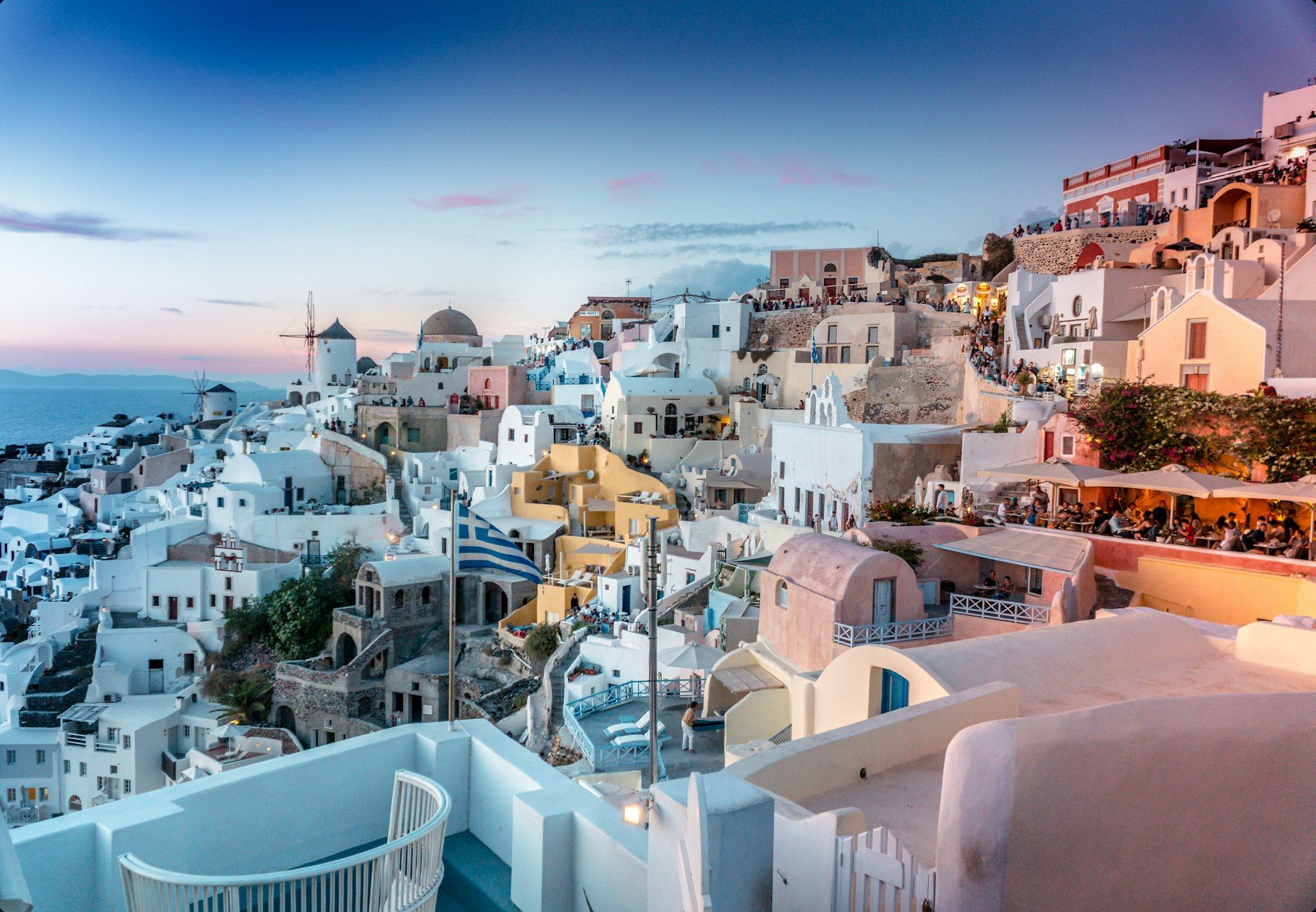
The Cyclades are the islands most people picture when they think of Greece: Santorini’s caldera, Mykonos’s windmills, the whitewashed geometry of villages that seem to defy gravity on volcanic cliffs. They’re popular for good reason. But the Cyclades also include quieter islands like Milos (with beaches carved from volcanic rock in colors you didn’t know stone could produce), Folegandros (with a clifftop chora that makes Santorini look crowded), and Naxos (the largest Cycladic island, with a mountainous interior, Venetian towers, and some of the best food in Greece).
I build Greek Islands itineraries that balance the iconic stops with the discoveries — the islands your group won’t see on anyone else’s Instagram.
Santorini: Beyond the Postcards
Yes, the sunset from Oia is every bit as good as the photographs suggest. But Santorini rewards depth. The volcanic wine produced from Assyrtiko grapes grown in basket-shaped vines is unlike anything else in the world. The archaeological site at Akrotiri — a Minoan city buried by volcanic eruption 3,600 years ago — is the Pompeii of the Aegean, extraordinarily well-preserved and far less crowded.
I send clients to Santo Wines for a tasting at sunset, to Metaxi Mas in Exo Gonia for the best traditional food on the island, and to the hot springs at Palea Kameni for a swim in volcanically heated water. The caldera sailing at dusk, with the cliffs glowing amber and the first stars appearing, is one of those experiences that justifies the entire trip.
Crete: An Island That’s Its Own Country
Crete is large enough and diverse enough to be its own destination. The Minoan palace at Knossos is the oldest known civilization in Europe. The Samaria Gorge is one of the longest canyon hikes on the continent. The south coast has beaches accessible only by boat or footpath. And the food — Cretan cuisine is the foundation of the Mediterranean diet, and eating your way across the island is one of the great culinary journeys in Europe.
I typically recommend Crete as a standalone five to seven night stay rather than a quick island-hop. Stay in Chania’s Venetian harbor for the old-town charm, then move to Elounda on the northeast coast for luxury resorts and views across to Spinalonga. A day trip into the White Mountains for a village lunch — lamb cooked in a wood oven, local cheese, and wine from grapes grown at altitude — is the kind of meal that resets your relationship with food.
The Private Yacht Option
For groups of 8 to 16, a private yacht charter transforms island-hopping from logistics into luxury. You wake up in a new harbor, swim off the back of the boat before breakfast, explore an island during the day, and cruise to the next one as the sun sets. The crew handles everything. Your itinerary is flexible by design — if you fall in love with a particular island, stay another night.
I work with crewed yacht charters out of Athens, Mykonos, and Santorini, ranging from traditional wooden gulets to modern motor yachts. A seven-day charter through the Cyclades with a professional captain, chef, and crew is one of the most indulgent ways to experience the Greek Islands, and for groups, the per-person cost is often comparable to a luxury hotel stay.
By Ship: The Small-Ship Approach
Windstar runs yacht-style Greek Islands sailings with 300 passengers max — intimate enough to access smaller harbors while covering more ground than a private charter. Their Beyond Inclusive Mediterranean package includes up to $1,000 onboard credit per guest plus a free pre-cruise hotel night. Silversea and Seabourn both offer ultra-luxury Greek Islands itineraries with all-inclusive pricing and expedition-level shore access. Seabourn is running a triple-stack promotion — air credit, suite upgrade, and shipboard credit — though it’s a flash sale, so timing matters.
Explora Journeys brings their brand-new ships to the Eastern Mediterranean with up to 30% off — a strong option for groups wanting the newest hardware afloat.
When to Go
May and October are my favorite months. The water’s warm, the islands aren’t at peak capacity, and the light has that particular Mediterranean quality — golden, soft, flattering to everything it touches. July and August bring the meltemi winds (perfect for sailors, less ideal for beach days) and peak crowds at the marquee islands. September is warm, calm, and increasingly my top recommendation for groups — the summer rush has ended, the sea is at its warmest, and the shoulder-season pricing opens up inventory that’s been sold out since March.
Highlights
Ready to explore Greek Islands?
Open a channel and tell us what you are looking for. We will build a custom itinerary.
Open a Channel