Cultural
Vietnam
Limestone karsts rising from emerald water, street food that humbles fine dining, and a country moving faster than anywhere else in Asia.
A Country in Motion
Vietnam is one of those places that delivers more than it promises. Travelers arrive expecting war history and pho. They leave having experienced one of the most dynamic, beautiful, and gastronomically rich countries on Earth. The energy of Hanoi’s Old Quarter. The serenity of a junk boat waking up in Ha Long Bay. The tailor shops of Hoi An where you walk in with a photo and walk out two days later with a custom suit. The Mekong Delta’s floating markets where commerce happens at 5 AM from boats piled with tropical fruit.
Vietnam runs the length of Southeast Asia’s eastern coast, which means the north and south feel like different countries. The north is mountainous, cooler, and steeped in Chinese-influenced culture. The south is tropical, French-influenced, and relentlessly energetic. A comprehensive Vietnam itinerary covers both, connected by a flight or the Reunification Express train.
Hanoi and the North
Hanoi is controlled chaos in the best sense. The Old Quarter’s 36 streets — each historically named for the trade practiced there — are a sensory experience that no amount of reading can prepare you for. Motorbikes flow like water around pedestrians. Tiny plastic stools line the sidewalks outside pho restaurants that’ve been serving the same recipe for four generations. Hoan Kiem Lake sits in the center of it all, impossibly calm.
The street food here isn’t a novelty — it’s the actual cuisine. Bun cha (grilled pork with noodles and herbs), banh mi (the perfect fusion of French and Vietnamese baking), egg coffee at Giang Cafe (where the drink was invented in 1946). I build culinary tours with local guides who know which stall has the best bun cha in the city and why the one next door, despite looking identical, isn’t even close.
An hour from Hanoi, Ninh Binh’s landscape of limestone karsts and rice paddies is often called “Ha Long Bay on land.” A sampan ride through Trang An’s caves and waterways is one of the most photogenic experiences in the country.
Ha Long Bay
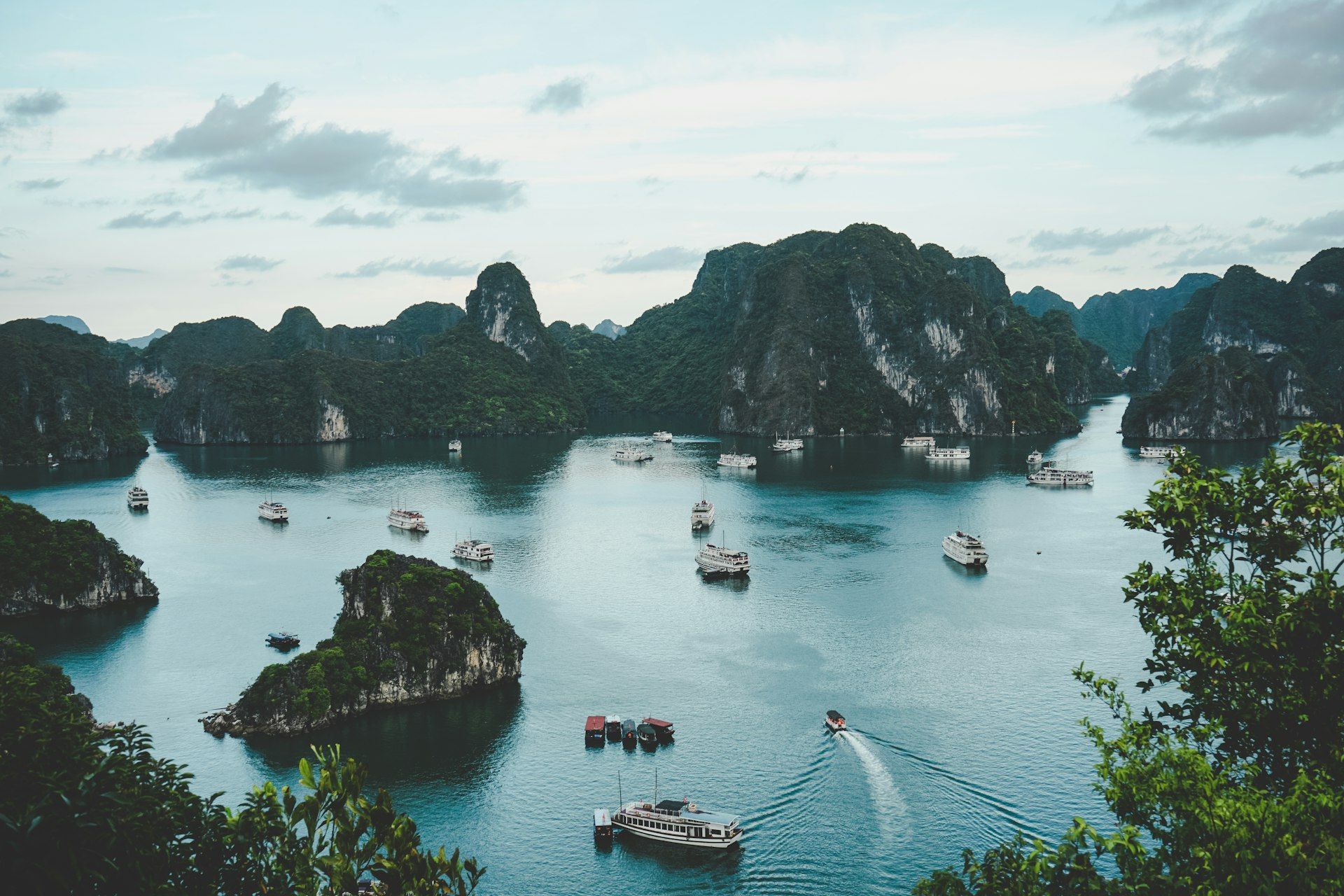
Ha Long Bay is the image that sells Vietnam: nearly 2,000 limestone islands and islets rising from emerald water, draped in jungle, dotted with hidden caves and floating fishing villages. A standard day trip doesn’t do it justice. An overnight cruise on a traditional junk boat — waking up anchored in a quiet bay, kayaking into grottoes at dawn, swimming in water that glows green — is one of Southeast Asia’s essential experiences.
I recommend two-night cruises that venture beyond the most visited areas to Bai Tu Long Bay, where the karsts are just as dramatic but the other boats aren’t. Heritage Line and Paradise Cruises operate vessels with the elegance of a boutique hotel and the intimacy of a private yacht.
Hoi An: The Town That Stops Time
Hoi An’s ancient town is a UNESCO World Heritage Site, and it earns the designation. Japanese covered bridges, Chinese assembly halls, French colonial shophouses, and Vietnamese tube houses line streets that are closed to motorbikes after 3 PM. At night, the town glows with silk lanterns reflected in the Thu Bon River.
The tailoring industry is legendary. Bring a photograph of any garment — a suit, a dress, a coat — and Hoi An’s tailors will produce a custom version in 24 to 48 hours for a fraction of what you’d pay elsewhere. I recommend Yaly Couture and A Dong Silk for the most consistent quality.
Beyond the old town, Hoi An’s surroundings offer cooking classes in garden settings, bicycle rides through rice paddies to Tra Que vegetable village, and An Bang Beach for those who want to do nothing at all for an afternoon.
The Mekong Delta
The Mekong Delta is Vietnam’s rice bowl — a vast network of rivers, canals, and islands south of Ho Chi Minh City where life happens on water. The floating markets at Cai Rang and Cai Be are working wholesale markets where boats laden with pineapples, dragon fruit, and coconuts trade at dawn. A sampan ride through the narrow canals, past fruit orchards and coconut candy workshops, is a glimpse into a way of life that hasn’t fundamentally changed in centuries.
I pair the Mekong Delta with Ho Chi Minh City (two days exploring the War Remnants Museum, the Cu Chi Tunnels, District 1’s rooftop bars, and the city’s own extraordinary street food scene) for a southern Vietnam experience that contrasts perfectly with the north.
Why Groups Work Here
Vietnam is exceptionally well-suited to group travel. Costs are lower than most premium destinations, which means the per-person budget stretches further — private guides, business-class domestic flights, luxury accommodations. The country’s tourism infrastructure is sophisticated, with English-speaking guides who are genuinely knowledgeable and hotels that range from heritage boutiques to international luxury brands.
For team offsites, the combination of cultural immersion, physical variety (cycling, kayaking, trekking), and outstanding food creates a trip that appeals to every personality type on your team. The cooking classes in particular — hands-on, collaborative, and ending with a meal everyone made together — are natural team-building experiences that don’t feel manufactured.
Our Preferred Partners
For a Mekong river cruise extension, AmaWaterways offers their purpose-built Mekong ships with a free land package plus up to $300 OBC. Zannier Hotels operates Bai San Ho, a stunning beachfront property in central Vietnam, with a pay-3-stay-4 deal that’s perfect as a mid-trip relaxation break. G Adventures runs Geluxe-tier Vietnam itineraries with 10% off select departures — ideal for groups that want structure without rigidity. And Kensington Tours builds fully custom private Vietnam itineraries for groups who want complete control.
When to Go
Vietnam’s length means there’s no single “best time.” October through April is ideal for the north (cool, dry). December through April suits the south. Central Vietnam (Hoi An, Hue) is best from February through August. I typically recommend a north-to-south itinerary in November or March, when both regions are at their most pleasant. Tet (Lunar New Year, usually late January/early February) is festive but many businesses close — it’s worth experiencing if you plan around it.
Highlights
Ready to explore Vietnam?
Open a channel and tell us what you are looking for. We will build a custom itinerary.
Open a Channel