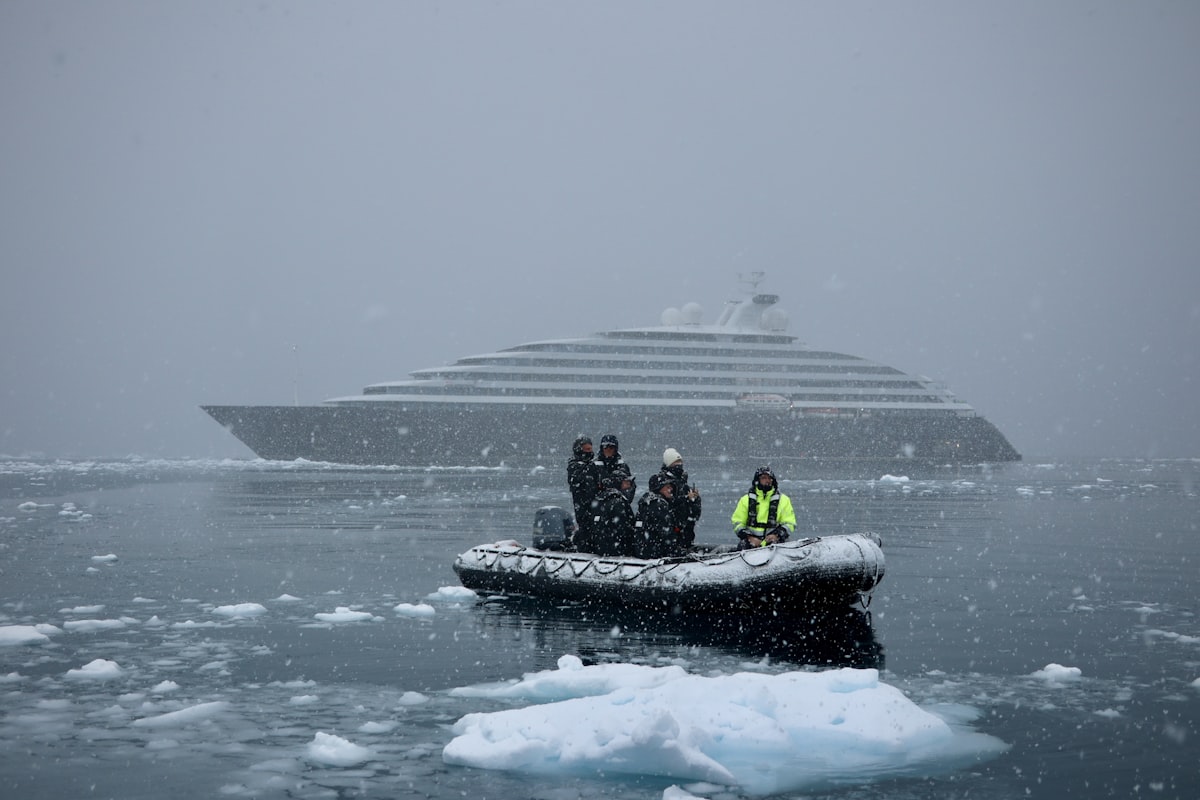
The first thing to understand about an expedition cruise is that it’s not a cruise. Not in the way that word typically conjures images of pool decks, buffet lines, formal nights, and Broadway-style shows. An expedition cruise is a floating basecamp that takes you to places commercial vessels can’t reach, staffed by scientists and naturalists instead of entertainers and cruise directors.
If you’re considering your first expedition cruise — to Antarctica, the Arctic, Galapagos, or any of the world’s remote coastlines — here’s everything I wish someone had told me before I boarded.
The Ship Is Small. That Is the Point.
Expedition ships typically carry 100 to 200 passengers. Some carry fewer than 100. Compare this to a mainstream cruise ship carrying 3,000 to 6,000 passengers, and the scale difference becomes clear.
Small ships exist in expedition cruising because the destinations demand them. Antarctic landing sites have a 100-passenger limit (set by IAATO, the International Association of Antarctica Tour Operators). Arctic fjords are too narrow for large vessels. Galapagos marine reserves restrict ship sizes. The destinations, not the cruise lines, determined the ship design.
The practical impact of a small ship:
You know everyone. By day three, you recognize faces. By day five, you have dinner companions. By day ten, you have friends. The social dynamic on a 150-passenger ship is closer to a dinner party than a resort.
Landings happen fast. With 100-150 passengers, a Zodiac landing operation takes 30-45 minutes to cycle everyone ashore. On a large expedition ship (200+ passengers), landings take 60-90 minutes. More time on shore, less time in a queue.
Itinerary flexibility. Small ships can change course quickly. If the captain spots whale activity 20 miles east, the ship diverts. If weather closes a planned landing site, an alternative is 30 minutes away. Large ships can’t pivot this easily.
No anonymous corners. You’ll interact with the expedition team daily. You’ll ask the glaciologist a question at breakfast and get a 20-minute conversation. The marine biologist will remember your name by day two.
What Happens Every Day
A typical day on an expedition cruise doesn’t follow the rigid schedule of a mainstream cruise. Instead, it follows the wildlife, the weather, and the light:
6:00 AM — Wake-up call from the expedition leader over the PA system. Something like: “Good morning, explorers. We’ve arrived at our first landing site. There’s a large colony of chinstrap penguins on the beach, and the weather is clear. Zodiac operations begin in 45 minutes.”
6:45 AM — Breakfast. Casual, buffet-style. Nobody’s dressed up. Everyone’s pulling on base layers and waterproof pants.
7:30 AM — Zodiac deployment. You descend to the mudroom (a staging area near the waterline), gear up (life vest, rubber boots, waterproof outer layer), and board a Zodiac inflatable with 8-10 other passengers and a naturalist guide.
8:00 - 11:00 AM — Shore landing. Walk among wildlife, hike to a viewpoint, take photographs, listen to the naturalist explain what you’re seeing. Time on shore varies from 1 to 3 hours.
11:30 AM — Back on ship. Warm up. Coffee. Maybe a quick lecture from the historian about the explorers who came before you.
12:30 PM — Lunch.
2:00 PM — Second landing or Zodiac cruise (a boat-based excursion without going ashore — ideal for iceberg-dense areas or coastlines with large wildlife populations). Or a lecture. Or free time while the ship repositions.
5:00 - 6:00 PM — Recap session. The expedition team gathers everyone in the lounge and reviews the day: what you saw, why it mattered, what to expect tomorrow. This is where the educational component of expedition cruising really shines — the day’s experience is contextualized and connected to the bigger picture.
6:30 PM — Dinner. A proper sit-down meal. Wine is usually included. The food on expedition ships ranges from good to exceptional — HX, Silversea, and Ponant are particularly strong.
8:00 PM — Evening program. A lecture on tomorrow’s destination, a documentary screening, or simply watching the ship pass through a dramatic landscape from the observation lounge.
The key difference from a mainstream cruise: every activity is about the destination. There’s no casino. There’s no pool party. The ship is a tool for experiencing the wilderness, not a floating resort that happens to be near it.
What to Pack (and What Not To)
Expedition cruise packing is different from any other trip. Here’s the essential list:
Provided by Most Expedition Lines (Verify With Your Operator)
- Expedition parka — Most polar cruise lines (HX, Quark, Lindblad, Ponant) loan you a heavy-duty parka. Yours to keep on some lines. Don’t buy one unless your operator confirms they don’t provide one.
- Rubber boots — Provided for shore landings. You’ll wade through shallow water, mud, and penguin-occupied beaches. Your own footwear stays on the ship.
You Need to Bring
Layering system (top):
- Base layer: merino wool or synthetic long-sleeve top (2-3)
- Mid layer: fleece or down jacket (1-2)
- Outer layer: the provided parka (polar) or your own waterproof shell (non-polar destinations)
Layering system (bottom):
- Base layer: merino wool leggings (2-3)
- Mid layer: hiking pants or softshell pants (2)
- Outer layer: waterproof pants or snow pants (1) — non-negotiable for polar landings
Accessories:
- Warm hat that covers ears (2 — one will get wet)
- Neck gaiter or buff (2)
- Waterproof gloves (1 pair outer, 1 pair liner)
- Sunglasses with UV protection (critical in polar regions — snow glare is intense)
- Sunscreen SPF 50+ (the ozone layer is thin at the poles)
Photography:
- Camera with a long zoom lens (200-400mm for wildlife close-ups)
- Wide angle lens (16-35mm for landscapes)
- Extra batteries (cold drains batteries fast — keep spares in an inside pocket)
- Waterproof dry bag for Zodiac rides
- Lens cloth (salt spray is constant)
Other:
- Binoculars (8x42 or 10x42 — this is the single most important item after your camera)
- Seasickness remedy (Bonine, Dramamine, or prescription scopolamine patches) — bring it even if you think you don’t need it
- Reusable water bottle
- Daypack for shore excursions
- Quick-dry towel
Leave Behind
- Formal wear (there are no formal nights)
- Heels (the ship moves)
- Excessive luggage (cabin storage is limited)
- Expectations of cell service (you’ll be off-grid)
- Drones (prohibited in Antarctica, restricted in Galapagos and most Arctic sites)
What No One Tells You
The Drake Passage is survivable. If you’re going to Antarctica, you cross the Drake Passage — 600 miles of open ocean between South America and the Antarctic Peninsula. Its reputation is fearsome. The reality: modern expedition ships have stabilizers, and the passage takes about 36 hours. Some crossings are rough (15-20 foot swells). Some are “Drake Lake” — flat as glass. Pack seasickness medication, take it before you need it, and use the time to attend lectures and settle into the ship. You’ll survive. Everyone does.
You won’t be cold. This surprises everyone. With a proper layering system and a provided expedition parka, you’ll be comfortable during landings that last 1-3 hours. You might even be too warm. Antarctic summer temperatures hover around 25-35 degrees Fahrenheit — warmer than a Minnesota winter.
The food is better than you expect. Expedition ships serve excellent food. Silversea and Ponant are genuinely Michelin-adjacent. Even mid-range expedition lines serve multiple courses with wine pairing at dinner. You won’t go hungry or bored.
You’ll use your binoculars more than your camera. Everyone comes with a 400mm lens and a plan to photograph everything. By day three, you realize that the binoculars provide a more intimate experience. You see the humpback whale’s eye. You see the penguin feeding its chick. The camera captures a record. The binoculars create a memory.
The quiet is the loudest part. Antarctica is the quietest place on Earth. When the Zodiac engine cuts and you drift among icebergs, the silence is physical. You can hear ice cracking miles away. You can hear a penguin call from across a bay. The absence of human noise — no traffic, no planes, no construction, no music — is profoundly disorienting and profoundly restorative.
You’ll want to go back. This is the universal experience. First-time expedition cruisers almost unanimously begin planning their next voyage within weeks of returning. The world is bigger, wilder, and more extraordinary than daily life allows you to remember. An expedition cruise reminds you.
Choosing Your First Expedition
If you’ve never done an expedition cruise, here are my recommendations by profile:
Maximum adventure, maximum bucket-list impact: Antarctica. 14 nights. November through March. This is the voyage that changes your perspective on the planet.
Shorter commitment, incredible wildlife: Galapagos. 7 nights. Year-round. Close encounters with fearless wildlife, snorkeling, and one of the most unique ecosystems on Earth.
Accessible from Europe, dramatic scenery: Arctic Norway / Svalbard. 10 nights. June through August. Polar bears, midnight sun, and fjords without the Drake Passage crossing.
Warm-water expedition: Indonesia’s Raja Ampat or the Kimberley coast (Australia). Remote, extraordinary biodiversity, and warm enough that you don’t need six layers.
Key Takeaways
- Expedition cruises are floating basecamps, not floating resorts — every activity revolves around the destination, not onboard entertainment.
- Small ships (100-200 passengers) mean faster landings, flexible itineraries, and genuine connections with fellow travelers and expedition staff.
- Pack layers, binoculars, and seasickness medication — and leave the formal wear at home.
- The Drake Passage is survivable, Antarctica isn’t as cold as you think, and the food is better than you’d expect.
- Book 12-18 months ahead for popular Antarctic and Galapagos sailings — they sell out.
Getting Started
The booking window for expedition cruises is longer than for mainstream cruises. Popular Antarctic sailings sell out 12-18 months in advance. Galapagos ships are small enough that peak-season sailings sell out even earlier.
We track availability across every major expedition line and can match you with the right ship, itinerary, and cabin category based on your priorities. Group rates kick in at 8 passengers and improve significantly at 16+.
If you’re thinking about your first expedition — or your fifth — open a Slack channel with our team. It takes five minutes, costs nothing, and the channel stays open as long as you want it. We’ll take it from there.