The thing nobody tells you about safari is that the camp matters more than the country.
A great camp in Kenya beats a mediocre camp in Tanzania. A great camp in Namibia beats a famous camp in South Africa. The difference between an unforgettable trip and an expensive one is almost entirely about who runs the camp, where it sits in the concession, and how their guides have been trained. The Big Five are everywhere. The thoughtful design and the guide who’s spent twenty years on this specific block of land are not.
I’ve sent enough clients to enough camps to have strong opinions. Here’s what I’d actually book if it were my own family.
How to Read This List
A few things to keep in mind before the rankings:
Camp ≠ country. The list below is camps, not countries. You’re picking a specific lodge with a specific guide team in a specific concession, not “going to Botswana.”
Concessions matter. Most great camps sit on private concessions — land leased from the government or a community trust where only that camp’s vehicles operate. National parks (Kruger, Serengeti, Masai Mara) are open to anyone who pays the gate fee, which is why they’re more crowded. Private concessions are why luxury safaris feel exclusive.
Per-night pricing is misleading. A camp at $1,800/night with charter flights, all meals, all drinks, all activities, and laundry included is often cheaper than a camp at $1,400/night where you pay separately for everything. I’ll note inclusions per camp.
Time of year is the variable that matters most. Even within a single camp, the experience changes radically between dry season (animals at waterholes, easy game viewing, no rain) and wet season (lush landscapes, fewer crowds, dramatic skies, harder spotting, much lower prices). I’ll note when each camp peaks.
Now the camps.
1. Mombo Camp (Botswana, Wilderness Safaris)
Wilderness Safaris flagship in the Okavango Delta. Mombo sits on a private concession in Moremi Game Reserve, on Chief’s Island. The wildlife density is absurd — Mombo is one of the only camps in Africa where the Big Five are routine, and where you’ll see leopard reliably without having to chase reports.
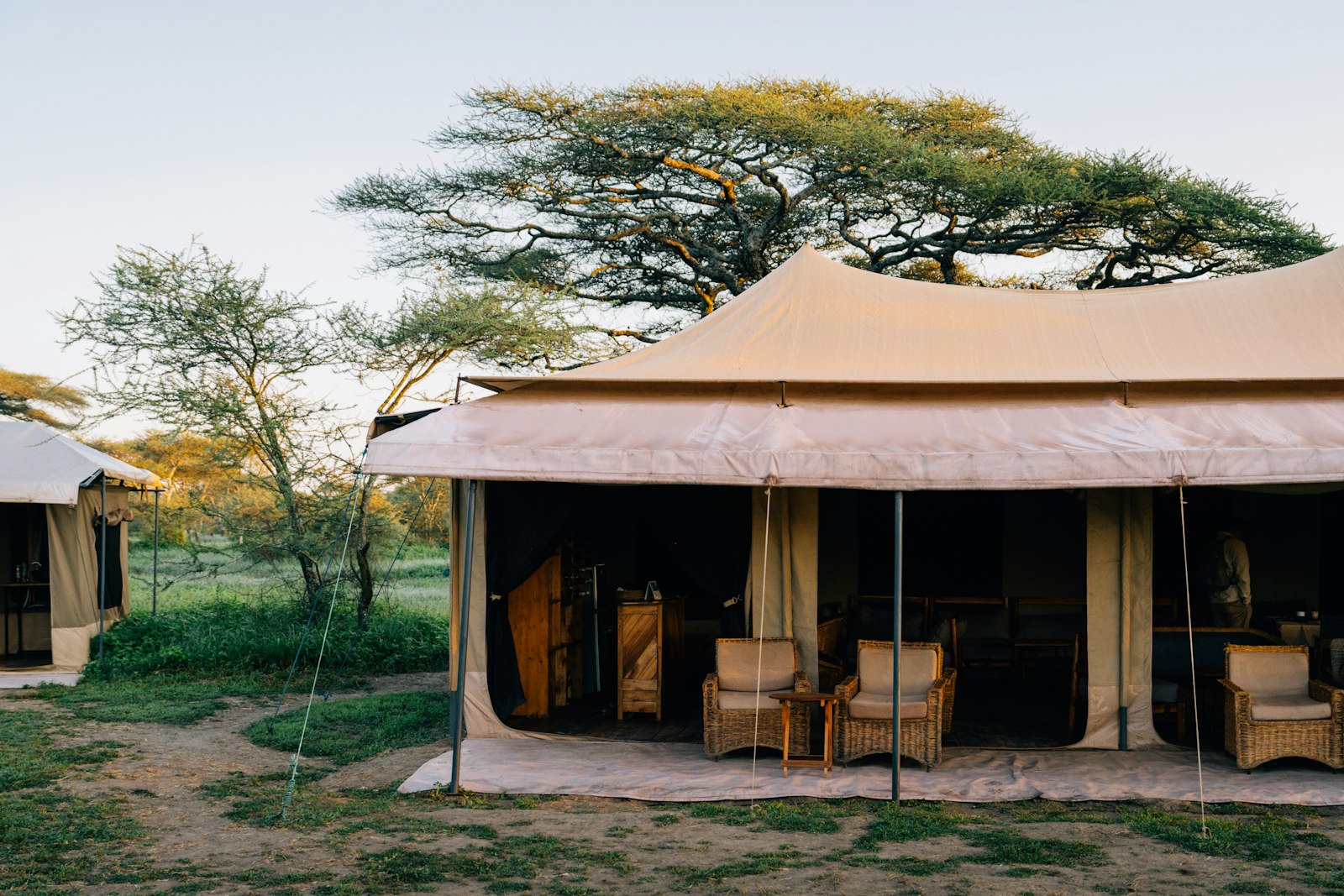
Tents: Nine. Each one is essentially a one-bedroom suite on stilts, with a private plunge pool, indoor and outdoor showers, and a deck looking onto floodplain. The interiors are restrained — natural wood, locally-woven textiles, no ostentation.
Guides: This is where Mombo separates from the field. The head guide team has 20+ years on the same concession. They know individual leopards by name, the rotation of lion prides, where the wild dogs den each season. You don’t get a “guide” — you get a wildlife biologist who’s also funny.
What’s included: Charter flights from Maun, all meals, all drinks (including wines), laundry, activities, and the option of sleeping out under the stars on the elevated boma. ~$2,800-3,800 per person per night.
Best for: First-time safari travelers who want the gold standard. Couples on milestone anniversaries. Groups of 4-6 willing to split the cost. Photographers — Mombo’s terrain gives you the leopard-on-tree-branch shots that other camps can only promise.
Skip if: You want a ton of people-time with other guests. Mombo is intimate by design and quiet by night.
Best months: May-October (dry season, peak game).
2. Singita Sabora (Tanzania, Singita)
If Mombo is the Botswana platonic ideal, Singita Sabora is the Tanzanian one. Sabora sits on the Grumeti private concession, west of the Serengeti — a 350,000-acre community-leased reserve that hosts the Great Migration crossing each summer.
Tents: Nine. The vibe is 1920s explorer chic, but in a way that feels intentional rather than themed. Each tent has a private deck, hand-carved furniture, and an outdoor copper bathtub with views.
Guides: Singita’s training program is the strictest in the industry. Guides go through an 18-month internal apprenticeship before they can lead a vehicle. That investment shows up everywhere — the way they read a track, the way they handle a sighting, the way they talk to first-timers about why we don’t approach the lion past a certain distance.
What’s included: Charter flights from Arusha, all meals, all drinks including premium wines from Singita’s own cellar, laundry, all activities (game drives, walks, fishing on the Grumeti River), spa time. ~$3,200-4,500 per person per night.
Best for: Couples who want polish without performance. Anyone who wants to combine safari with quiet luxury. People who care about wine — Singita’s cellar is one of the best in Africa, and the sommeliers are the real thing.
Skip if: You want rugged. Sabora is luxurious by design and not apologetic about it.
Best months: June-October (dry); November-March for migration births in the southern Serengeti (book Singita Mara River for that).
3. Singita Kwitonda (Rwanda, Singita)
A different category entirely — this is gorilla trekking in Rwanda, not classic safari, but it belongs in any honest list.
Tents: Eight suites and one four-bedroom villa. Each suite has its own fireplace, private deck, and views of Volcanoes National Park. The architecture is intentionally low — built into the hillside so the silhouette doesn’t intrude on the volcanoes.
Guides: Kwitonda has the best gorilla trekking guide team in the country, full stop. They know individual gorilla families and have direct relationships with the park rangers. They’ll get you to the right family for the right hike — older clients go to the Susa group (further trek but smaller, more intimate group); families with kids go to Hirwa (closer, more photogenic).
The trek: Mountain gorilla permits are $1,500 per person per day in Rwanda. You hike 1-4 hours into the rainforest with porters and trackers, then spend a strict 60 minutes with a habituated gorilla family at 8-15 feet of distance. It’s the most affecting wildlife encounter on Earth and the time goes faster than you think possible.
What’s included: Permits and porters for two trekking days, all meals, all drinks, transfers from Kigali, spa, laundry, and a night at Kwitonda’s adjacent farm-to-table restaurant. ~$2,400-3,400 per person per night.
Best for: Anyone planning a once-in-a-lifetime African moment. Particularly good as a 3-night addition to a longer Tanzania or Kenya safari. Multi-gen families with reasonably-fit teens (the trek is doable but real).
Skip if: You can’t manage 1-4 hours of moderate hiking at altitude. Bwindi (Uganda) gorillas are reachable via lodges with shorter treks if mobility is an issue.
Best months: June-September and December-February (drier; muddier treks the rest of the year).
4. Mara Plains (Kenya, Great Plains Conservation)
Kenya’s Masai Mara has a reputation problem — the public reserve gets overcrowded with vehicles during migration season. Mara Plains, on the private Olare Motorogi conservancy, is the answer to that problem.
Tents: Seven, each on raised platforms over a riverine forest where elephants come through. The tents are large (about 1,100 square feet) but feel intimate because of the dense bush around them.
Guides: Great Plains Conservation has co-investment in conservation training programs across East Africa. Their guides are mostly Maasai, deeply knowledgeable about both wildlife and the cultural landscape. The guide-to-vehicle ratio is one private vehicle per booking — meaning you’re not sharing a Land Cruiser with strangers.
What’s included: Charter flights from Nairobi, all meals (Mara Plains has serious food — the executive chef trained in London), all drinks, laundry, day and night drives, conservation fees, walking safaris, hot air balloon optional. ~$2,400-3,200 per person per night.
Best for: People who want migration crossings without crowds. Photographers (Olare Motorogi has the highest big-cat density in Kenya). Couples and small groups looking for genuine cultural depth alongside game viewing.
Skip if: You want the classic “Out of Africa” feel. Mara Plains is more rooted in conservation work than in colonial nostalgia, which I’d argue is the right move, but some clients miss the latter.
Best months: July-October for migration river crossings; year-round for resident wildlife.
5. Sossusvlei Lodge (Namibia, Tollman Family / Andbeyond Sossusvlei Desert Lodge)
A different planet from the others. Sossusvlei sits in the NamibRand Reserve, surrounded by the world’s oldest desert and some of the largest sand dunes on Earth (Big Daddy hits 325 meters).
Suites: Ten stone-and-glass suites, each with floor-to-ceiling windows facing the dunes, retractable roofs over the bed for stargazing, a heated plunge pool, and private telescope. The architecture is genuinely modernist — clean lines, neutral tones, almost gallery-like.
Guides: Less classic-safari than the others — Sossusvlei guides are more about geology, ecology, and astronomy than the Big Five. You’ll see oryx, springbok, mountain zebra, and (with luck) cheetah, but the headline isn’t the megafauna. It’s the landscape, the silence, and the night sky.
What’s included: Transfers from Windhoek (drive or charter), all meals, all drinks, guided dune walks, hot-air balloon rides, e-bike trails, astronomical observatory access. ~$2,300-3,000 per person per night.
Best for: Honeymoons. Photographers (the dunes at sunrise are unrivaled). Anyone who’s done a classic safari and wants something that’s distinctly not that. Couples who care about stargazing — Namibia is in the world’s first International Dark Sky Reserve.
Skip if: You want a Big Five game safari. This isn’t it.
Best months: May-September (cool nights, no rain); December-February for the wet-season green desert (rare and gorgeous, but limited).
6. Vumbura Plains (Botswana, Wilderness Safaris)
Northern Okavango. The other Wilderness Safaris flagship beyond Mombo, but with a totally different character. Vumbura is in a wetter part of the delta — water-based safaris are the headline (mokoro canoes, motorboat cruises) alongside game drives.
Tents: Fourteen across two camps (Vumbura North and South). Each tent has multiple decks, an outdoor bath, and views of the floodplain. The architecture leans more contemporary than Mombo’s classic-canvas feel.
Guides: Same Wilderness training pipeline as Mombo. Vumbura guides are also boat captains — they navigate the channels with the same instinct as they read tracks on land. You’ll see hippo, croc, sitatunga (a rare swamp antelope), and a different cast of birds than at drier camps.
What’s included: Same as Mombo (charter flights, all meals, all drinks, laundry, all activities), with the addition of mokoro and boat trips. ~$2,400-3,400 per person per night.
Best for: Pairing with Mombo or another dry-land camp for a “two camps in seven days” delta combo — water and land. Birders. People who’ve done classic safari and want the variety of a water-based experience.
Skip if: You’re prone to seasickness on small boats. The mokoro is dugout-canoe-style and feels exposed.
Best months: May-October (peak; flooding is highest). November-April for low water.
7. Sandibe Okavango Safari Lodge (Botswana, andBeyond)
andBeyond’s flagship in the southern Okavango. The architecture is the headline — the lodge is built into a riverine forest, twelve suites that look like fish-spine pavilions designed by Michael Mandavle (who also designed Phinda Forest Lodge). The interior of each suite is cathedral-arched wood, with the roof structure visible above the bed.
Tents: Twelve. Each suite has a private plunge pool, indoor and outdoor showers, a private deck, and rope bridges connecting to a rooftop sundeck. They’re as much architectural objects as accommodations.
Guides: andBeyond’s training is right up there with Singita and Wilderness. Sandibe sits on a private concession in the Santawani area, with leopard particularly reliable.
What’s included: All meals, all drinks, laundry, charter flights, day and night drives, mokoro, walking safaris, conservation activities (you can join the lodge’s lion-tracking team for a day). ~$2,400-3,300 per person per night.
Best for: Architecture-conscious travelers (this is one of the most photographed lodges in Africa). Honeymoons. Multi-gen groups looking for one place to base for a week.
Skip if: You want classic-canvas. Sandibe is intentionally not tents — these are architectural pavilions.
Best months: May-October (peak).
8. Singita Pamushana (Zimbabwe, Singita)
The least-known on this list, and possibly my favorite. Pamushana sits on the Malilangwe Reserve in southeastern Zimbabwe — 130,000 acres of community-protected wilderness with rhino, elephant, leopard, lion, and a guide team that’s been there for two decades.
Suites: Six villas, each one large enough to comfortably host a family of four. Each villa has its own infinity pool, multiple bedrooms, and panoramic views of the Chiredzi River below. They’re more “private bush home” than “tented camp.”
Guides: Singita’s standard, but the smaller scale means you get more time with the same guide. The Malilangwe Reserve has the highest leopard density on this list — your odds of multiple sightings in a 5-night stay are above 90%.
What’s included: All meals (the food is genuinely exceptional — Pamushana has its own vegetable gardens and the Singita pastry team), all drinks, laundry, charter flights from Harare, all activities. ~$2,800-3,800 per person per night.
Best for: Families (the suites accommodate multi-gen groups easily). Repeat safari-goers who want somewhere they haven’t been. Anyone whose first safari taught them they want more space, more privacy, and more time at one camp.
Skip if: You want classic East African open-savanna terrain. Pamushana is rockier, more wooded, more “African Highlands.”
Best months: April-September (dry); November-March for green-season birding and lower rates.
How to Pick
If you’ve read this far, you’re probably trying to figure out which one. Here’s the decision tree I actually use:
- First-ever safari, want the platonic ideal: Mombo (Botswana) or Singita Sabora (Tanzania). Both deliver the postcard.
- You’ve done a safari and want to go deeper: Vumbura Plains paired with Mombo, OR Mara Plains for the conservancy-private-vehicle experience.
- It’s a honeymoon: Sandibe (architecture) or Sossusvlei (silence + dunes + stargazing).
- You want gorillas: Singita Kwitonda. There is no second answer.
- You want a multi-gen family trip with kids: Singita Pamushana (the villa model works for 6-8 people) or Mara Plains (great food, varied activities).
- You want something most people haven’t seen yet: Pamushana or Vumbura Plains.
The Layered Trip Is the Real Move
The best East African or Southern African safari isn’t a single camp. It’s two or three camps over 10-14 days, in different ecosystems. The pairing matters more than any single choice.
A 12-day classic Botswana itinerary pairs Mombo (game) with Vumbura (water) and ends with one or two nights in Cape Town for civilization. A 14-day Tanzania trip pairs Singita Sabora (Grumeti) with Singita Mara River (migration crossings) and finishes with two nights in Zanzibar for beach time. A 10-day Rwanda + Tanzania trip pairs three nights at Kwitonda (gorillas) with seven nights in the Serengeti. These are the routes that consistently produce the trips clients are still talking about five years later.
The single-camp safari is a fine trip. The well-designed multi-camp safari is the trip that becomes a story you tell for the rest of your life.
Why Book Through Travel Tamers
Direct booking gets you the room. We get you:
- The right room in the right camp at the right time of year (camps have their own internal preferred-room ranking — clients booking direct don’t see it)
- Pre-charters and post-trip arrangements actually coordinated (charter flights between camps are the part that usually goes wrong without an advisor)
- Group benefits and complimentary upgrades on multi-camp Wilderness, Singita, and andBeyond bookings
- Conservation-fee verifications and the right gorilla permit allocations
- A real person at 3am if a charter goes sideways or someone needs a medical evacuation
If you’re thinking about a safari — your first or your fifth — reach out. The most useful conversation we can have isn’t about a single camp; it’s about which 2-3 camps, in which order, in which season, are the right shape for who you are right now.