I’ve sent dozens of clients to Japan, and the pattern is impossible to miss: tech people come back different. Not in the vague, “travel changes you” way. In a specific, structural way. They’ve seen a country that works the way they wish everything worked — systems that are reliable, craft that’s taken seriously, and an entire culture that treats continuous improvement as a moral obligation rather than a corporate buzzword.
Japan isn’t just a great trip. For engineers, product leaders, and anyone who builds things for a living, it’s a mirror that shows you what obsessive quality looks like when an entire society commits to it.
Why Japan Resonates With the Tech Mind
The Japanese word kaizen — continuous improvement — didn’t originate in Silicon Valley whiteboards. It’s a lived philosophy that predates your favorite agile framework by centuries. You see it in the sushi master who spent ten years learning to cook rice before he was allowed to touch fish. In the blacksmith in Sakai who’s forging knives the same way his family has for fourteen generations, except each generation made it slightly better. In the train system that apologizes for a 54-second delay and publishes a formal incident report.
The intersection of craft and technology is what gets people. Japan doesn’t treat tradition and innovation as opposites. A 300-year-old ceramics studio uses Instagram to sell globally. The shinkansen (bullet train) network runs at 200 mph with a cumulative average delay across all trains of under 30 seconds per year. That’s not a typo. The entire national high-speed rail network’s annual average delay is measured in seconds.
Food as engineering. This is the one that breaks people’s brains. A ramen shop serves one dish. The owner has been making that one dish for 30 years. The broth simmers for 18 hours. The noodles are custom-milled to a specific thickness that matches the broth’s viscosity. The egg is marinated for exactly 24 hours. You eat it in 12 minutes, and it’s the best thing you’ve ever tasted. That’s not cooking. That’s iterative engineering with a human-centered design philosophy.
Japan has more Michelin stars than France. Tokyo alone has more than Paris. This isn’t an accident — it’s the inevitable output of a culture that treats food preparation as a discipline worthy of a lifetime’s dedication.
The Two-Week Framework
Two weeks is the right number. One week is too rushed — you’ll spend half of it adjusting to jet lag and the other half wishing you had more time. Three weeks is diminishing returns for a first trip. Here’s how to structure it.
Get a Japan Rail Pass before you leave. The 14-day JR Pass costs around $460 and covers all shinkansen routes plus most local JR trains. It pays for itself by day three. Activate it at any major station when you arrive.
Days 1-4: Tokyo
Day 1 is jet lag management. Check in, walk the neighborhood, eat ramen at a local spot (not a famous one — the random neighborhood joints are better), sleep early. Don’t fight it.
Day 2: Tsukiji Outer Market and Ginza. Tsukiji’s inner wholesale market moved to Toyosu, but the outer market — the part you actually want — is still there. Get there by 7 AM. Eat tamagoyaki (rolled omelet) from Yamachou, fresh uni on rice, and grilled scallops from any vendor with a line. Then walk to Ginza for the contrast: Japan’s most polished shopping district. The Ginza Six department store is worth an hour for architecture alone.
Day 3: Akihabara and teamLab. Akihabara is the electronics district, and yes, it’s overwhelming. But beyond the anime shops, there are component stores where you can buy individual resistors, vintage synthesizer shops, and retro gaming floors that’ll consume hours. Book teamLab Borderless (now in Azabudai Hills) for the evening — it’s an immersive digital art museum that’s genuinely impressive, not gimmicky.
Day 4: Shibuya, Harajuku, and Golden Gai. Watch the Shibuya crossing from the Starbucks above (still the best view). Walk through Harajuku’s backstreets — Takeshita-dori is tourist chaos, but the side streets have incredible architecture and small boutiques. End the night in Golden Gai, Shinjuku’s alley of 200+ tiny bars, each seating 6-8 people. Pick one that looks interesting, sit down, and talk to the bartender. This is where Tokyo reveals itself.
Days 5-7: Hakone and Mount Fuji
Take the Romancecar express from Shinjuku to Hakone (90 minutes, not covered by JR Pass but worth the $30). Hakone is hot springs country, and this is where you do your first ryokan stay.
A ryokan is a traditional Japanese inn. You sleep on futon on tatami floors, wear a yukata (cotton robe), and bathe in onsen (hot springs). The multi-course kaiseki dinner served in your room is one of the great dining experiences on earth. Book Gora Kadan if budget allows (around $800/night) or Hakone Ginyu for excellent quality at half the price.
Spend a day on the Hakone Loop: cable car, ropeway over volcanic vents, pirate ship across Lake Ashi, with Fuji in the background on clear days. It sounds touristy. It is touristy. It’s also spectacular.
Days 8-10: Kyoto
The shinkansen from Tokyo to Kyoto takes 2 hours and 15 minutes. You’ll cover 300 miles. The train will arrive within seconds of the scheduled time.
Kyoto is the cultural core. There are 2,000 temples and shrines here, and you don’t need to see most of them. Focus on these:
- Fushimi Inari — the 10,000 orange torii gates up the mountainside. Go at dawn to avoid crowds. Walk the full loop (2-3 hours). Most tourists stop at the first viewpoint.
- Kinkaku-ji (Golden Pavilion) — yes, it’s on every postcard. See it anyway. The reflection in the pond on a still morning is worth dealing with the crowds.
- Arashiyama Bamboo Grove — again, go early. By 10 AM it’s a photo-op traffic jam. At 7 AM it’s transcendent.
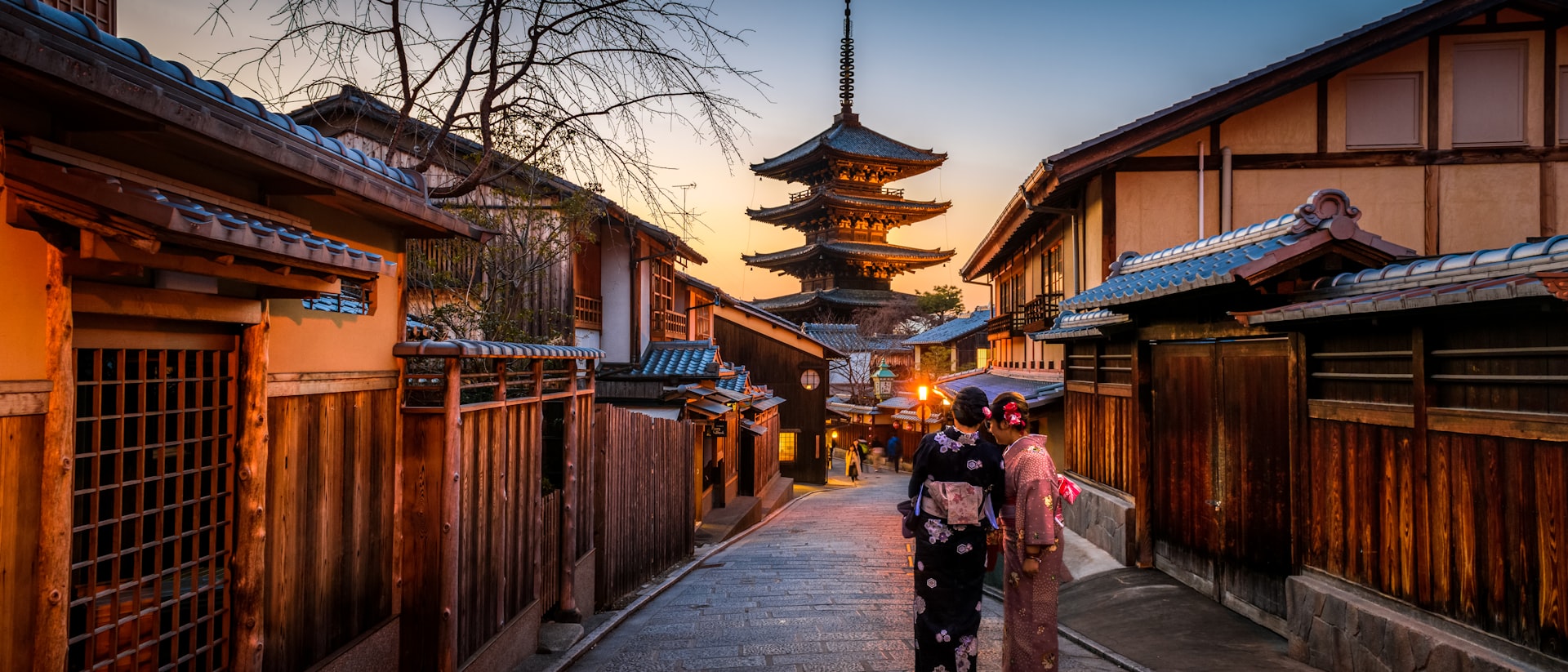
- Gion district — Kyoto’s geisha quarter. Walk Hanamikoji-dori in the early evening. If you’re lucky, you’ll see a maiko (apprentice geisha) heading to an appointment. Don’t photograph them without permission.
Book a private tea ceremony. Not a tourist group session — a private one with a tea master who’ll explain the philosophy behind every movement. It’s an hour. It’ll change how you think about ritual and intention in design. Budget $150-200 per person.
Days 11-12: Osaka
Osaka is 15 minutes from Kyoto by shinkansen and it’s a completely different energy. Tokyo is polished. Kyoto is refined. Osaka is loud, funny, and obsessed with food.
Dotonbori is the neon-lit food street where you eat your way from one end to the other: takoyaki (octopus balls), okonomiyaki (savory pancake), kushikatsu (deep-fried skewers), and gyoza. Everything costs $3-8 and everything is exceptional.
Take a day trip to Nara (45 minutes by train). The deer park is charming, but the real draw is Todai-ji, an 8th-century wooden temple housing a 50-foot bronze Buddha. The building is the largest wooden structure in the world. Standing inside it recalibrates your sense of what humans can build.
Days 13-14: Hiroshima and Miyajima
The shinkansen to Hiroshima is 90 minutes from Osaka. The Peace Memorial Museum is mandatory. It’s devastating, detailed, and treats the subject with the gravity it deserves. Budget two hours minimum.
Take the ferry from Hiroshima to Miyajima Island (covered by JR Pass). The floating torii gate at Itsukushima Shrine is one of Japan’s most iconic images, and it hits harder in person than in photos. Stay for sunset if your schedule allows.
The Food Itinerary Within the Itinerary
Japan demands a parallel food plan. Here’s the framework:
Omakase sushi. Book one high-end omakase in Tokyo. “Omakase” means “I’ll leave it to you” — the chef selects and prepares each piece. A proper omakase is 15-20 courses over 90 minutes. Budget $200-400 per person at the mid-to-high tier. Sukiyabashi Jiro is the famous one (and nearly impossible to book). There are dozens of equally excellent options — your advisor can secure reservations that aren’t available to the public.
Ramen taxonomy. Japan has regional ramen styles the way America has barbecue regions. Tonkotsu (pork bone, creamy, Fukuoka-origin) is the most popular. Shoyu (soy sauce base, Tokyo-style) is the classic. Miso (Sapporo-origin, hearty) is the winter choice. Shio (salt base, delicate) is the purist’s pick. Try at least three styles.
Kaiseki. The multi-course Japanese haute cuisine. It’s seasonal, hyper-local, and presented like edible architecture. Your ryokan dinner will be kaiseki, but also book a standalone kaiseki dinner in Kyoto. Kikunoi (three Michelin stars) is the standard-bearer.
Street food essentials. Beyond Osaka’s Dotonbori: melon pan (sweet bread) from any bakery, onigiri (rice balls) from 7-Eleven (seriously — Japanese convenience store food is better than most American restaurants), yakitori from any smoky alley stall, and matcha soft serve everywhere.
Conveyor belt sushi (kaiten-zushi). Don’t skip this because it sounds lowbrow. Japan’s conveyor belt sushi is better than most sit-down sushi restaurants in the US. Chains like Sushiro and Kura Sushi serve remarkably fresh fish at $1-3 per plate. It’s a great casual lunch between temples, and the ordering system (touchscreen tablets, automated delivery rails) is a tech experience in itself.
Depachika (department store basement food halls). Every major department store has an underground floor dedicated to food. Isetan in Shinjuku, Takashimaya in Kyoto, Daimaru in Osaka — these are culinary wonderlands. Wagyu beef samples, artisanal mochi, seasonal fruit (individual strawberries for $5 that taste like nothing you’ve had before), bento boxes assembled like jewelry. Budget an hour and eat your way through.
Whisky distillery visits. Japanese whisky is world-class and the distilleries are beautiful. Yamazaki Distillery (outside Kyoto, Japan’s oldest malt whisky distillery, est. 1923) and Hakushu Distillery (in the Japanese Alps, surrounded by forest) both offer tours with guided tastings. The Yamazaki 12 and 18 are legendary, but the distillery-exclusive bottlings you can only buy on-site are the real prizes. Book months in advance — they sell out fast.
Coffee culture. Japan’s kissaten (traditional coffee shops) are a revelation. These aren’t Starbucks competitors — they’re dimly lit, wood-paneled rooms where a single barista hand-pours every cup with the same obsessive precision applied to everything else in this country. Chatei Hatou in Shibuya and Café de l’Ambre in Ginza are institutions. A pour-over here takes 5-7 minutes and costs $8. Worth every second and every yen.
Luxury Accommodations That Earn Their Price
My advice: do both ryokans and luxury hotels. They’re completely different experiences and you need both to understand Japan.
Aman Tokyo is the pinnacle. Minimalist design that references traditional Japanese aesthetics, floor-to-ceiling windows over the Imperial Palace gardens, and service that’s invisible until you need it. Rooms start around $1,200/night.
Park Hyatt Tokyo is the Lost in Translation hotel, and it earned the reputation. The New York Bar on the 52nd floor has the best cocktail view in Tokyo. Rooms from $600/night. If you’re a Hyatt loyalist, your points go far here.
Ritz-Carlton Kyoto sits on the Kamogawa River and blends Western luxury with Japanese design better than almost anywhere. The river-view rooms are worth the premium.
The Ritz-Carlton Kyoto sits on the Kamogawa River and blends Western luxury with Japanese design better than almost anywhere. The river-view rooms at sunset, when the light hits the Eastern Hills across the water, justify the entire trip to Kyoto. Request a corner suite on the river side.
One night in a capsule hotel. I’m serious. Not because it’s comfortable (it’s fine, actually), but because it’s a pure expression of Japanese space efficiency philosophy. Nine Hours in Kyoto is the cleanest, best-designed option — designed by Fumie Shibata, all white and minimal, with a pod that feels more like a first-class airline seat than a hostel bunk. It’ll cost you $40 and give you a great story.
Why You Want an Advisor for Japan
Japan is one of the hardest destinations to plan independently. Not because it’s dangerous or complicated to navigate — the infrastructure is impeccable. It’s hard because the best experiences aren’t bookable through normal channels.
Top sushi restaurants don’t have websites. They have phone numbers that only accept calls in Japanese, during specific hours, exactly 30 days before your desired date. Ryokans with the best kaiseki often require a Japanese intermediary to book. The teamLab tickets, the Yamazaki Distillery tours, the private tea ceremonies — they all sell out weeks or months ahead.
Kensington Tours is our partner for Japan and they’re exceptional at it. They have on-the-ground connections in every city, private guides who’ll take you to places that aren’t in any guidebook, and the ability to secure restaurant reservations that would otherwise be impossible. The difference between a good Japan trip and a transcendent one is almost entirely in the details that a specialist handles.
Key Takeaways
- Two weeks is the right length. The JR Pass makes intercity travel fast and affordable. Don’t try to do Japan in a week.
- The food is the main event. Plan your meals as carefully as you plan your sightseeing. Budget for at least one omakase and one kaiseki dinner.
- Mix ryokans with hotels. You need both experiences to understand the range of Japanese hospitality.
- Book early, book with help. The best restaurants and experiences require Japanese-language bookings months in advance.
- Go with an open schedule. Leave gaps. The best moments in Japan are the unplanned ones — the tiny bar you stumble into, the shrine you find on a side street, the conversation with a shopkeeper who’s been doing one thing for 40 years.
If you’re a builder who wants to see what a culture of relentless improvement actually looks like in practice, we can help. Open a Slack channel with our team — it takes five minutes, costs nothing, and the channel stays open as long as you want it.