Alaska is the trip that Americans keep putting off. It sits right there on the bucket list, year after year, always deferred in favor of something warmer or more exotic. And then the people who finally go come back and say the same thing: “Why did I wait so long?”
There’s a reason for that reaction. Alaska delivers at a scale that’s difficult to comprehend until you see it in person. Glaciers taller than skyscrapers. Fjords that stretch to the horizon. Bald eagles so common they barely register after the first day. Humpback whales breaching close enough to feel the spray.
But how you see Alaska matters enormously. The difference between an Alaska cruise on a 4,000-passenger mega-liner and an Alaska expedition on a 200-passenger small ship isn’t incremental. It’s categorical.
The Case for Going Small
The major cruise lines run massive ships through Alaska’s Inside Passage every summer. They’re floating cities with buffets, casinos, and Broadway shows. The scenery slides past while you eat dinner, and port stops are spent navigating crowds at tourist-facing shops in Juneau and Ketchikan.
There’s nothing wrong with this experience if that’s what you want. But if you came to Alaska for Alaska — for the wildlife, the wilderness, the raw scale of glacial landscapes — a small expedition ship isn’t a luxury upgrade. It’s a fundamentally different trip.
Expedition ships go where big ships can’t. The most spectacular areas of Alaska’s coastline — narrow fjords, shallow bays, tidewater glacier faces — are inaccessible to ships with deep drafts. An expedition ship draws 15-20 feet of water. A mega-liner draws 30 or more. That difference means expedition guests reach glacier faces that big-ship passengers see only from miles away.
You get off the ship. On a conventional cruise, you experience Alaska from the deck or from a bus at a port of call. On an expedition, you board Zodiac inflatable boats and go ashore on uninhabited beaches. You hike through temperate rainforests. You kayak in protected coves while sea otters float beside you. The boundary between you and Alaska dissolves.
The guides change everything. Expedition ships carry naturalist guides, marine biologists, and wilderness experts who spend the entire voyage interpreting what you see. When a humpback whale begins bubble-net feeding off the bow, you have someone beside you explaining exactly what’s happening and why. When you spot a brown bear on a riverbank, your guide can tell you whether it’s a sow with cubs, how old the cubs are, and what they’re fishing for. This running commentary transforms observation into understanding.
Fewer passengers means more wildlife. Animals are sensitive to noise and disturbance. A Zodiac with 12 people approaches a seal haul-out quietly and sees natural behavior. A 4,000-passenger ship creates enough wake and noise to alter the behavior of every animal in the vicinity. It’s a simple equation.
Inside Passage vs. Gulf of Alaska
Alaska cruise itineraries generally fall into two categories, and the choice matters.
The Inside Passage
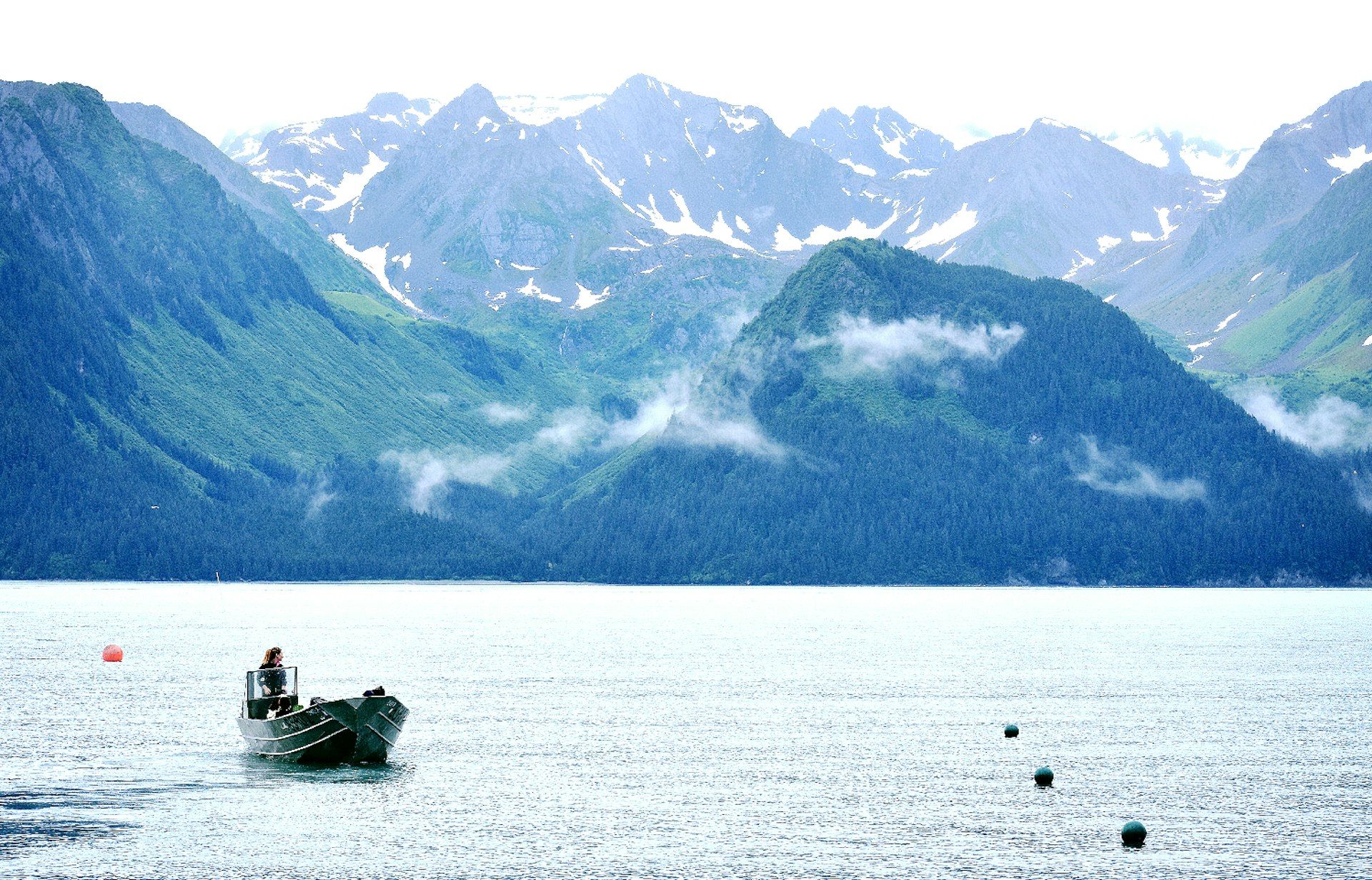
The classic Alaska cruise route runs along the sheltered waterway between Juneau and Ketchikan, threading through a maze of islands, narrow channels, and fjords. The water is typically calm because the islands block open-ocean swells.
Inside Passage highlights:
- Tracy Arm and Endicott Arm — Deep fjords with active tidewater glaciers. Expedition ships enter these fjords and position within a few hundred meters of the glacier face. The cracking and calving is constant, and the blue ice is extraordinary.
- Frederick Sound — Premier humpback whale feeding grounds in summer. Bubble-net feeding, breaching, and spy-hopping are common.
- Wrangell and Petersburg — Small, authentic Alaska towns that the mega-liners skip. Norwegian fishing heritage, totem parks, and genuine local culture.
- Misty Fjords National Monument — Granite walls rising 3,000 feet from the water, waterfalls cascading into narrow channels. Accessible only by small ship or floatplane.
The Gulf of Alaska
Voyages that cross the Gulf of Alaska (typically between Juneau and Seward or Whittier) include open-ocean sailing and access to the Kenai Peninsula. The Gulf route adds several highlights that the Inside Passage alone doesn’t reach:
- Hubbard Glacier — The largest tidewater glacier in North America, six miles wide at its face. It’s actively advancing, which is unusual for modern glaciers, and the calving events are spectacular.
- Kenai Fjords National Park — Glacier-carved fjords, massive seabird colonies, and Steller sea lion rookeries. The Harding Icefield feeds dozens of glaciers into the sea.
- Prince William Sound — Remote, pristine, and filled with wildlife. Orcas, sea otters, harbor seals, and puffins are common. Some expedition itineraries spend an entire day exploring this area by Zodiac.
The tradeoff is that the Gulf crossing includes open water, and the North Pacific can be rough. For travelers prone to seasickness, the sheltered Inside Passage may be the better choice.
When to Go
The Alaska expedition season runs from May through September, and the timing affects what you see.
May and early June — Snow still caps the mountains at lower elevations. Waterfalls are at peak flow from snowmelt. Bear activity is strong as they emerge from hibernation. Whale migration is underway. Crowds are lightest. Prices are lowest.
Late June and July — Peak season. Longest daylight hours, with 18-19 hours of light. The warmest temperatures, typically 55-65 degrees Fahrenheit in coastal areas. Humpback whale density is at its highest. Brown bears are fishing the salmon runs. Wildflowers are in bloom. This is the sweet spot for most travelers.
August — Salmon runs peak. Brown bear viewing is outstanding, particularly at locations like Pack Creek on Admiralty Island. Berry season attracts bears to shorelines. The first hints of fall color appear at higher elevations.
September — The shoulder season. Fewer ships, lower prices, and the beginning of aurora borealis season. Fall colors are vivid. The light is golden and low, which photographers love. Rain increases, but the crowds are gone.
The Expedition Lines to Know
HX Expeditions — Operates purpose-built expedition ships in Alaska with a strong science program. Their hybrid-powered vessels are among the most environmentally advanced in the fleet. HX excels at getting guests close to wildlife with minimal disturbance, and their citizen science programs give you a role in ongoing research.
Silversea Expeditions — The luxury option. All-suite ships with butler service, outstanding cuisine, and a full expedition program including Zodiacs, kayaks, and expert naturalists. If you want world-class comfort without sacrificing the expedition experience, Silversea is the benchmark.
Lindblad-National Geographic — Pioneers of Alaska expedition cruising. Their partnership with National Geographic brings onboard photographers and filmmakers who help guests capture the experience. Their ships are smaller (under 100 guests on some), which means even more intimate wildlife encounters.
UnCruise Adventures — The adventure-forward option. Smaller vessels, emphasis on kayaking, paddleboarding, hiking, and snorkeling. More physically active than other expedition lines, with a younger average guest demographic.
What to Pack
Alaska expedition packing is about layers and waterproofing. The weather changes rapidly, and you may experience sunshine, rain, and cold wind in a single afternoon.
- Waterproof jacket and pants — Non-negotiable. Zodiac excursions involve spray.
- Warm mid-layers — Fleece or down. Multiple thin layers outperform one thick one.
- Base layers — Merino wool keeps you warm even when damp.
- Waterproof day pack — For hikes and Zodiac excursions.
- Binoculars — 8x42 or 10x42. You’ll use them every day, multiple times a day.
- Camera with zoom capability — Wildlife isn’t always at arm’s length. A 100-400mm lens range covers most situations.
- Sunglasses and sunscreen — UV reflection off water and ice is intense, even on overcast days.
- Rubber boots — Most expedition lines provide these for wet landings. Confirm before packing your own.
The Investment
Alaska expedition cruises typically range from $6,000 to $18,000 per person for a 7 to 14-day voyage, depending on the line and cabin category. That price includes all meals, excursions, expert guides, and Zodiac operations. Some lines include drinks and gratuities.
Compared to a conventional Alaska cruise, the price is higher. Compared to what you actually experience, the value is extraordinary. You’re not watching Alaska from a distance. You’re in it.
Key Takeaways
- Small expedition ships (100-200 passengers) access narrow fjords, glacier faces, and wildlife areas that mega-liners can’t reach.
- The Inside Passage is calm and sheltered; the Gulf of Alaska route adds Hubbard Glacier and Kenai Fjords but includes open-ocean sailing.
- Late June through July is the sweet spot for most travelers: longest days, warmest temps, peak whale density, and salmon-fishing bears.
- HX for science, Silversea for luxury, Lindblad for photography, UnCruise for adventure — match the line to your priorities.
- Budget $6,000-$18,000 per person for a 7-14 day expedition, with meals, excursions, and guides included.
Getting Started
At Travel Tamers, we help travelers choose the right Alaska itinerary for their priorities. Whether you want the luxury of Silversea, the adventure focus of UnCruise, or the science program of HX, we’ll match you with the ship and route that fits.
Alaska will still be there next year. But the 2027 season is already booking. If this is the year you stop putting it off, we can help. Open a Slack channel with our team — it takes five minutes, costs nothing, and the channel stays open as long as you want it.