The average tech executive checks their phone 96 times a day. That’s not a guess — it’s the data from a 2025 Asurion study, and the number for C-suite leaders runs higher. Every check is a context switch. Every context switch costs 23 minutes of deep focus to recover from, according to UC Irvine’s research. Do the math on that and you’ll understand why most leaders describe their mental state as “perpetually skimming” — present enough to respond, never present enough to think.
Corporate retreats try to fix this with off-sites at resort hotels where the Wi-Fi password is on the welcome card and Slack notifications ping through dinner. It doesn’t work. You can’t reset your attention in the same environment that fractured it.
You need a place where disconnection isn’t a choice you make — it’s a condition of the landscape. East Africa is that place.
The Case for Going Offline
The neuroscience here isn’t complicated. Attention Restoration Theory, developed by researchers Rachel and Stephen Kaplan at the University of Michigan, identifies four conditions required for cognitive recovery: being away from routine, fascination with the environment, a sense of extent (being in a world large enough to feel immersive), and compatibility with your personal inclinations.
Safari checks all four. You’re 8,000 miles from your desk. The wildlife is genuinely fascinating — not in a “this is pleasant” way, but in a “I can’t look away” way that researchers call involuntary attention. The Serengeti ecosystem is 12,000 square miles of unbroken wilderness. And if you’re the kind of person who reads this site, the compatibility piece is already handled.
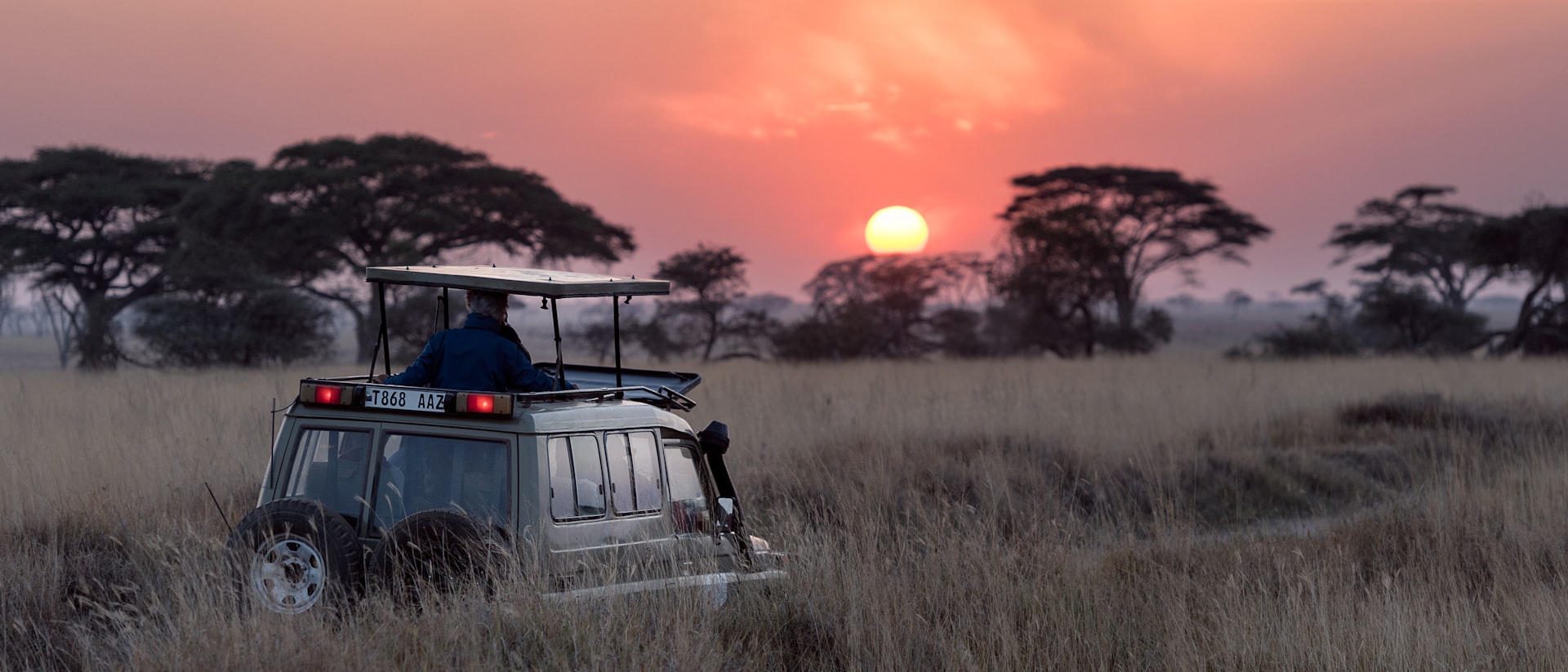
The connectivity situation seals it. Most premium safari camps have some Wi-Fi in the main lodge area, but it’s satellite-based, slow, and unreliable. Your phone won’t have cell signal during game drives. You’re out from 5:30am to 10am, back for lunch and rest, then out again from 3:30pm to sunset. During those drives, you’re physically unable to check email, take calls, or scroll feeds. It’s not discipline. It’s geography.
By day three, something shifts. The constant low-grade anxiety of being reachable fades. You start noticing things — the way light moves across the grass at different hours, the social dynamics of an elephant herd, the sound of absolute silence broken only by birds. Your brain stops scanning for notifications and starts processing the world in front of you. Tech executives I’ve sent on safari consistently describe this as the first time in years they’ve experienced genuine, unforced mental clarity.
That’s not a vacation. That’s a competitive advantage you’re bringing home.
Tanzania vs. Kenya vs. Rwanda
All three countries offer world-class safari experiences, but they’re different trips with different strengths. Here’s the decision framework.
Tanzania
Best for: first-time safari travelers, Great Migration seekers, and anyone who wants maximum wildlife density with minimum tourist density.
Tanzania’s northern circuit — Serengeti, Ngorongoro Crater, Tarangire, Lake Manyara — is the gold standard for East African safari. The Serengeti alone covers 5,700 square miles and supports the largest terrestrial mammal migration on Earth. Ngorongoro Crater is a self-contained ecosystem in a volcanic caldera, with some of the highest predator densities anywhere. You’ll see lions, leopards, cheetahs, elephants, buffalo, and hundreds of bird species without trying hard.
Tanzania also has lower tourist volumes than Kenya’s Masai Mara, partly because the parks are bigger and partly because the government limits vehicle numbers at sighting areas. If you want the feeling of having the savanna to yourself, Tanzania delivers.
Duration: minimum 7 nights to cover Serengeti + Ngorongoro properly. 10 nights if adding Tarangire or the southern Serengeti for calving season.
Kenya
Best for: travelers who want the classic Masai Mara experience combined with diverse landscapes, or those with 5-6 nights.
Kenya’s Masai Mara National Reserve is where the Great Migration river crossings happen (July-October), and these are among the most dramatic wildlife events on the planet. Wildebeest and zebra plunge into crocodile-filled rivers in a spectacle that’s simultaneously beautiful and brutal. Kenya also offers Amboseli (elephants framed by Kilimanjaro), Laikipia Plateau (private conservancies, endangered species), and the Samburu region (unique northern species like Grevy’s zebra and reticulated giraffe).
Kenya’s private conservancies are a major advantage. Unlike national parks where you’re restricted to roads, conservancies allow off-road driving, walking safaris, and night drives. This dramatically increases the quality and intimacy of wildlife encounters.
Duration: 5-6 nights for Masai Mara focused. 8-10 nights for Mara + a second region.
Rwanda
Best for: gorilla trekking as the primary objective, often combined with Tanzania or Kenya.
Mountain gorilla trekking in Volcanoes National Park is singular. There’s nothing else like it — sitting three meters from a 400-pound silverback as he placidly strips bamboo and his family plays around him. It’s a one-hour encounter that will be one of the most vivid memories of your life. Rwanda limits permits to 96 per day across all gorilla groups, at $1,500 per permit. Book 6-12 months out.
Rwanda also offers excellent primate tracking (golden monkeys, chimpanzees) and a growing safari scene at Akagera National Park. Kigali itself is one of Africa’s cleanest, safest, and most interesting capital cities.
Duration: 3-4 nights for gorilla trekking. Often paired with 7+ nights in Tanzania or Kenya for a complete East African itinerary.
Lodge Selection for People Who Don’t Camp
Let’s be clear: nobody’s asking you to sleep on the ground. The term “tented camp” in East African luxury safari means a permanent structure with canvas walls, a king bed with 600-thread-count sheets, an en-suite bathroom with a rain shower, and a private deck overlooking the bush. Some have plunge pools. Many have better food than the restaurants you frequent at home.
Abercrombie & Kent sets the standard here. Their Sanctuary Retreats portfolio includes some of the finest safari properties in East Africa, and their private-guide model means you never share a vehicle with strangers. When I send a client on an A&K safari, I know the guiding quality, the lodge standards, and the logistics will be flawless. That matters when you’re in a remote ecosystem with no room for operational errors.
The “one exceptional lodge” strategy: If budget is a consideration (and at $1,500-3,000+ per person per night for top-tier camps, it’s a real number), here’s my recommendation. Don’t spread the budget evenly across every night. Book one world-class property for 3-4 nights in the prime wildlife area, and pair it with a well-regarded mid-tier camp for 2-3 nights elsewhere. The exceptional camp becomes the anchor memory of the trip. You’ll forget where you stayed on the average nights. You’ll never forget the extraordinary ones.
Private conservancies over national parks when possible. In a conservancy, your camp might have exclusive traversing rights over 30,000+ acres. That means fewer vehicles at sightings, off-road access to follow predator hunts, and walking safaris with armed guides that let you experience the bush at ground level. This is where the real magic happens — tracking a leopard on foot with a Maasai guide, learning to read animal tracks and dung, understanding the ecosystem as a participant rather than a spectator.
Timing the Great Migration
The Great Migration — roughly 1.5 million wildebeest, 400,000 zebra, and 200,000 gazelle moving in a continuous loop through the Serengeti-Mara ecosystem — is the most spectacular wildlife event on Earth. But timing matters enormously.
January-March (Southern Serengeti): Calving season. 8,000 wildebeest are born daily during a three-week window. Predators concentrate around the herds — this is prime time for big cat action. Green, lush landscapes. Fewer tourists.
April-May: The long rains. Lower rates, dramatic skies, reduced visibility on some days. The herds begin moving northwest. Not ideal for a first visit, but green season has its own beauty.
June-July: The herds reach the Western Corridor and begin massing at the Grumeti River. The first river crossings happen here — smaller scale than the Mara, but intense. Dry season begins. Excellent game viewing across the board.
August-October (Masai Mara, Kenya): The iconic Mara River crossings. This is what you’ve seen in documentaries — thousands of wildebeest plunging into the river while crocodiles wait. Peak season, highest demand, and the most dramatic wildlife spectacle. Book 12 months out.
November-December: Short rains push the herds back south toward the Serengeti. Transitional period with good value and decent wildlife. The cycle restarts.
My recommendation for first-timers: January-February for calving in the southern Serengeti, or August-September for river crossings in the Mara. Both are peak experiences. Calving is less crowded and easier to book. River crossings are more dramatic but demand advance planning.
What Tech Execs Need to Know
Safari logistics are different from anything else in luxury travel. A few things that catch first-timers off guard:
You’re flying between parks, not driving. Distances in East Africa are enormous, and road infrastructure outside cities is rough. A 200-mile drive that Google Maps estimates at 4 hours actually takes 7-8 on unpaved roads. Internal bush flights on small Cessna-style aircraft take 45-60 minutes and land on grass airstrips. This is normal, safe, and by far the best way to travel. Strict luggage limits apply — typically 15-20kg in a soft-sided bag. Leave the hard-shell suitcase at your Nairobi hotel.
Visas and vaccinations require lead time. Tanzania and Kenya both offer e-visas, but apply at least 2 weeks before departure. Yellow fever vaccination is required if arriving from an endemic country and recommended regardless. Malaria prophylaxis is essential — consult a travel medicine clinic at least 4-6 weeks before travel. Anti-malarials have different side effect profiles, so get medical advice rather than grabbing whatever’s available.
Photography gear: A 100-400mm zoom is the workhorse safari lens. Your phone won’t cut it beyond basic landscape shots — animals are often 30-100 meters away. A bean bag (not a tripod) stabilizes your camera on the vehicle door frame. Bring more memory cards and batteries than you think you need. Charging at remote camps can be limited to solar power during certain hours.
Connectivity expectations: Set them with your team before you leave. You’ll be offline for 6-8 hours during game drives. Main lodge Wi-Fi works for brief email checks but not video calls or large file transfers. Tell your direct reports you’re unreachable during drive hours. Give your EA the lodge’s satellite phone number for genuine emergencies. Then put your phone in the room safe and leave it there. The entire point is to be unreachable. Embrace it.
Tipping culture: Safari guides, camp staff, and drivers rely on gratuities as a significant portion of their income. Budget $25-50 per person per day for camp staff (distributed via a communal tip box) and $20-30 per person per day for your private guide. Your travel advisor will provide specific guidance for each property.
Key Takeaways
- Safari isn’t a vacation — it’s a cognitive reset that leverages forced disconnection and natural fascination to restore the deep focus that executive life erodes.
- Tanzania for first-timers, Kenya for river crossings, Rwanda for gorillas. Combine two for the definitive East African experience over 10-14 days.
- One exceptional lodge beats three average ones. Concentrate your budget on the anchor property and let it define the trip.
- Time it to the migration. January-February for calving, August-September for river crossings. Book 12 months out for peak season.
- Prepare for bush logistics: soft bags, internal flights, medical prep, and explicit offline communication plans with your team.
If you’re considering an East African safari — whether it’s a solo leadership reset, a trip with your partner, or a family experience with older kids — we can help. Open a Slack channel with our team — it takes five minutes, costs nothing, and the channel stays open as long as you want it.