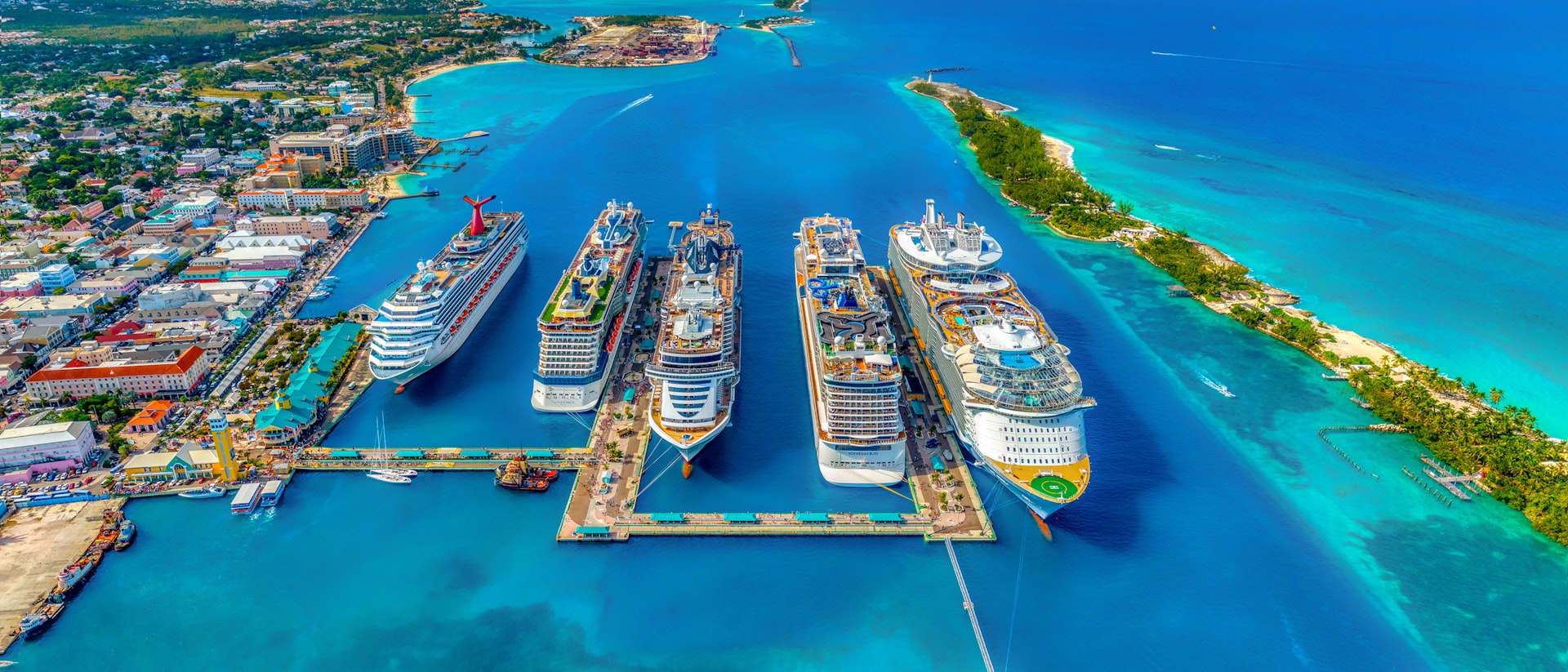
Every week I get some version of the same question: “I want to do a luxury cruise, but I can’t tell the difference between these lines. They all say they’re the best.” Fair. From the outside — glossy brochures, stock photos of couples on private balconies, words like “unparalleled” and “bespoke” — they blur together. But once you’ve sailed them, the differences are stark. Each line has a distinct personality, a specific type of traveler it serves best, and trade-offs that matter.
Here’s what I’d tell you over a drink, with no sales pitch attached.
What “Luxury” Actually Means in Cruising
Before we rank anything, let’s define the category. Luxury cruising means ships carrying roughly 100 to 750 guests, with all-suite accommodations (or close to it), inclusive pricing that covers most or all extras, and a staff-to-guest ratio that makes personal service possible rather than theoretical.
The key metrics that separate luxury from premium:
Space ratio. Gross tonnage divided by passenger capacity. Mainstream ships land around 30-40. Premium ships hit 40-50. Luxury starts at 50 and the best exceed 70. Higher space ratio means wider hallways, bigger public areas, less crowding at the pool, and the general feeling that you’re not on a floating shopping mall.
Staff-to-guest ratio. Mainstream: 1 crew member per 2.5-3 guests. Luxury: 1:1 to 1:1.3. This is why your butler actually remembers that you like your espresso at 6:30 AM and your pillow firm.
All-inclusive scope. This is where the lines diverge most. “All-inclusive” can mean anything from “drinks are included” to “literally everything including your flights.” Read the fine print. I’ll break it down for each line below.
Regent Seven Seas: The Math Always Works
Regent Seven Seas is the line I recommend most often, and the reason is simple: it’s the most truly all-inclusive cruise product in the world. When Regent says all-inclusive, they mean it. Flights. Shore excursions. All restaurants. All drinks. WiFi. Gratuities. Laundry. Pre-cruise hotel night on longer voyages. It’s all in the fare.
The fleet: Five ships — Explorer (750 guests), Mariner (700), Voyager (700), Splendor (746), and the newest, Grandeur (746). All-suite, all-balcony. The smallest category is 300 square feet, which is larger than most luxury competitors’ standard suites.
The math argument. Regent’s per-night cost looks high on paper — typically $600-1,200 per person per night depending on suite and itinerary. But add up what other lines charge as extras (shore excursions at $100-200 each, drink packages at $80/day, WiFi at $20/day, gratuities at $16-20/day, specialty dining at $50-75 per meal) and Regent frequently comes out even or cheaper. I’ve done this calculation dozens of times for clients. Regent wins the spreadsheet almost every time.
Best for: Anyone who doesn’t want to think about what’s included. If the idea of signing for extras on vacation irritates you — and it should — Regent eliminates that entirely. Also excellent for first-time luxury cruisers because there are zero surprises.
Strongest itineraries: Mediterranean, Alaska, Northern Europe, and their world cruise (the annual 120+ night circumnavigation sells out a year in advance).
Silversea: Luxury Meets Expedition
Silversea runs a dual fleet that no other luxury line matches. Their classic ocean ships (Silver Dawn, Silver Moon, Silver Spirit, Silver Nova, Silver Ray) compete directly with Regent in the traditional luxury space. But their expedition fleet (Silver Cloud, Silver Wind, Silver Explorer, Silver Endeavour, Silver Origin) takes you to places like the Galapagos, Antarctica, and the Arctic in genuine luxury. Nobody else does this at this level.
Butler service in every suite. Not just the penthouse categories — every single suite gets a butler. This sounds like a gimmick until your butler unpacks your luggage, draws your bath after an expedition landing, and has hot chocolate waiting when you come back from a Zodiac tour of a glacier.
What’s included: All drinks (including champagne), all restaurants, butler service, gratuities, WiFi, and one shore excursion per port on most sailings. Flights are included on select voyages (especially expedition). Not quite Regent-level all-inclusive, but close.
Best for: Travelers who want luxury AND adventure. If your ideal trip alternates between a zodiac landing on a sub-Antarctic island and a six-course dinner with Burgundy pairings, Silversea is the only line that does both without compromise.
Strongest itineraries: Galapagos (Silver Origin is purpose-built for it), Antarctica, Arctic Norway, and Mediterranean.
Seabourn: Quiet Sophistication
Seabourn is the introvert’s luxury line, and I mean that as the highest compliment. Their ships carry 458 to 604 guests. Every suite has a veranda. The atmosphere is calm, refined, and never performative. If Regent is a great resort and Silversea is an adventure lodge, Seabourn is a private club.
The Seabourn difference is in the details. The Retreat, their bow-of-the-ship outdoor lounge, is one of the best spaces at sea — Balinese daybeds, ocean views, nobody rushing you. Their partnership with UNESCO gives excursions a depth that standard port tours can’t match. And Ventures by Seabourn adds complimentary kayaking, hiking, and zodiac tours in select ports — expedition-style activities without being on an expedition ship.
What’s included: All drinks, all restaurants, gratuities, and Ventures excursions where available. Standard shore excursions and WiFi packages are extra (though WiFi is complimentary at a basic tier). Flights are not included.
Best for: Travelers who value serenity over stimulation. Seabourn guests tend to be experienced cruisers who’ve done the bigger ships and want something quieter. The demographic skews slightly older and very well-traveled. If you want to read a book on a daybed without a DJ by the pool, this is your line.
Strongest itineraries: Mediterranean, Northern Europe, Asia, and their newer Arctic and Antarctica expedition sailings.
Crystal: The Comeback Worth Watching
Crystal Cruises has a complicated recent history — bankruptcy, acquisition by A&K Travel Group (the parent of Abercrombie & Kent), and a full relaunch. The new Crystal is sailing with two ships that carry around 600 guests each, and early reviews suggest they’ve kept what made Crystal great while modernizing what needed it.
What made Crystal great was always the social energy and dining program. Crystal ships are slightly larger than the other luxury lines, which creates a livelier atmosphere. There are more dining venues, more entertainment options, and more variety in the passenger mix. The cuisine — particularly the Asian-fusion restaurant and the Italian venue — consistently ranked as the best at sea before the hiatus.
What’s included: Drinks, gratuities, WiFi, and specialty dining. Shore excursions and flights are not included. The inclusion level is a step behind Regent and Silversea.
Best for: Travelers who want luxury without stuffiness. Crystal has always attracted a slightly younger, more social demographic than Seabourn. If you want a lively bar scene, outstanding food, and the ability to meet interesting people at dinner, Crystal delivers. Also strong for anyone who knows the pre-bankruptcy Crystal and wants to see the revival.
Strongest itineraries: Mediterranean, Caribbean, and transoceanic crossings.
Ritz-Carlton Yacht Collection: Hotel DNA on Water
The Ritz-Carlton Yacht Collection is the newest entrant. Their ship, Evrima, carries just 298 guests — making it one of the smallest luxury vessels afloat. The second yacht, Ilma, launched recently with similar capacity.
The hotel-on-water thesis. Ritz-Carlton built these yachts for people who love luxury hotels but have never been interested in cruising. The design language, service style, and even the terminology (they call it a “yacht voyage,” not a cruise) are borrowed from the hotel world. If you’re a Ritz-Carlton Rewards member, your status transfers. If you’ve never cruised because the idea felt downmarket, this is designed to change your mind.
The marina platform is Ritz-Carlton’s signature physical feature. The stern opens up to create a swimming and water sports platform directly on the ocean. Jet skis, paddleboards, snorkeling — all from the back of the ship. No other luxury line offers this.
What’s included: All drinks, all dining, gratuities, WiFi, and water sports from the marina. Shore excursions and flights are not included.
Best for: Hotel loyalists crossing over to the cruise world. If you stay at Ritz-Carlton or St. Regis properties and have never considered a cruise, start here. The experience will feel familiar. Also excellent for younger luxury travelers (40s-50s) who find traditional cruise lines stuffy.
Strongest itineraries: Mediterranean and Caribbean. The small ship size allows access to ports that bigger vessels can’t reach.
Explora Journeys: The Design Statement
Explora Journeys is MSC Group’s luxury brand, and they’ve done something smart: they built ships that look nothing like cruise ships. Explora I and Explora II carry around 900 guests (larger than the others on this list) but the design is distinctly modern European — think yacht club meets Milan design studio.
Ocean Residences are Explora’s headline product: multi-bedroom suites with full kitchens, living rooms, and private terraces that function more like waterfront apartments than cruise cabins. They start around $25,000 per voyage and target ultra-high-net-worth travelers who want a permanent home at sea.
What’s included: All drinks, all restaurants, gratuities, WiFi, and a curated shore experience in each port. Flights not included. The inclusion level is competitive with Silversea.
Best for: Design-conscious travelers who care about aesthetics as much as service. If you choose hotels based on architecture and interiors — if you’ve stayed at Aman, Nobu, or Edition properties — Explora’s design language will resonate. Also strong for multigenerational family travel thanks to the Ocean Residences.
Strongest itineraries: Mediterranean, Northern Europe, and Caribbean.
The Comparison Matrix
| Regent | Silversea | Seabourn | Crystal | Ritz-Carlton | Explora | |
|---|---|---|---|---|---|---|
| Ship size | 700-750 | 100-728 | 458-604 | ~600 | 298 | ~900 |
| Price/night | $600-1,200 | $500-1,100 | $450-900 | $400-800 | $550-1,000 | $450-900 |
| Flights included | Yes | Select voyages | No | No | No | No |
| Shore excursions | All included | 1 per port | Extra | Extra | Extra | 1 per port |
| All drinks | Yes | Yes | Yes | Yes | Yes | Yes |
| All dining | Yes | Yes | Yes | Yes | Yes | Yes |
| Gratuities | Included | Included | Included | Included | Included | Included |
| WiFi | Included | Included | Basic tier | Included | Included | Included |
| Butler service | Top suites | All suites | Top suites | Top suites | All suites | Top suites |
| Expedition ships | No | Yes (6 ships) | Yes (2 ships) | No | No | No |
| Space ratio | 60-70 | 55-75 | 55-65 | 50-55 | 60+ | 50-55 |
Decision tree by traveler type:
- “I don’t want to think about money on vacation.” → Regent. Nothing else comes close on total inclusion.
- “I want to see Antarctica/Galapagos/Arctic in luxury.” → Silversea. Dual fleet is unmatched.
- “I want peace and quiet.” → Seabourn. The Retreat alone is worth booking.
- “I want great food and social energy.” → Crystal. Strongest dining program and liveliest atmosphere.
- “I’ve never cruised and I’m skeptical.” → Ritz-Carlton Yacht. Hotel DNA makes the transition seamless.
- “I care about design and aesthetics.” → Explora. Most visually striking ships afloat.
Why an Advisor Matters More in Luxury
Here’s something the cruise lines won’t tell you: the published price is a starting point, not a final number. In luxury cruising, amenity negotiations are standard practice. Onboard credits, suite upgrades, pre-cruise hotel nights, private car transfers, exclusive dining experiences — these are all on the table, but only if you know to ask and have the relationships to back it up.
We work directly with all six of these lines. That means:
Suite selection nuance. Not all suites in the same category are equal. Midship suites on deck 7 ride smoother than forward suites on deck 10. Some suites have obstructed balcony views that the deck plan doesn’t clearly show. Some are directly above the nightclub. An advisor who’s been on the ship knows which cabin numbers to request and which to avoid.
Group holds. If you’re traveling with another couple or a small group, we can hold multiple suites at group rates — which are 10-20% below published fares — without requiring the minimum cabin count that the line would normally demand.
Combinable offers. Cruise lines frequently run promotions that can stack: a fare sale plus an onboard credit plus a reduced deposit. An advisor tracks these across all six lines and knows which combinations the booking system will accept.
The difference between booking directly and booking through an advisor isn’t just price (though it’s often that too). It’s the difference between getting a suite and getting the right suite on the right ship on the right itinerary with every available perk applied.
Key Takeaways
- Regent is the safest bet for first-timers. The all-inclusive pricing eliminates every variable. If you don’t know which line to choose, start here.
- Silversea owns the expedition-luxury intersection. Nobody else does Galapagos or Antarctica at this service level.
- Ship size determines atmosphere more than brand. 298 guests (Ritz-Carlton) feels like a private yacht. 900 guests (Explora) feels like a boutique resort. Know which energy you want.
- The published price is never the final price. Amenity negotiations, group rates, and stackable promotions can save 15-25% on luxury sailings.
- Match the line to your personality, not the brochure. Every line on this list is excellent. The question isn’t “which is best” — it’s “which is best for you.”
If you’re ready to step into luxury cruising and want someone to cut through the marketing noise, we can help. Open a Slack channel with our team — it takes five minutes, costs nothing, and the channel stays open as long as you want it.