Every year, a few million people step onto a cruise ship for the first time. Most of them spent weeks agonizing over the same question: river or ocean? The answer isn’t about which is better. It’s about what kind of traveler you are and what kind of experience you’re looking for.
Having planned both for teams and individuals, I can tell you that these are fundamentally different vacations that happen to share a mode of transport. Here’s what you actually need to know.
The Fundamental Difference
An ocean cruise is a floating resort. The ship itself is the destination — with restaurants, theaters, pools, spas, and enough square footage to get genuinely lost. You wake up in a new port, spend a few hours ashore, and return to a vessel that could comfortably house a small town.
A river cruise is a floating boutique hotel. The ship is intimate, typically carrying 100 to 190 passengers instead of 3,000. You dock in the center of town, walk off the gangway, and you’re standing in the medieval square of a European village. The destinations are the point. The ship is how you move between them.
Size and Atmosphere
Ocean ships are engineered for variety. Royal Caribbean’s Icon of the Seas carries over 5,600 guests. Even the premium lines — Celebrity, Holland America, Princess — run ships with 2,000 to 3,000 passengers. There are formal nights and casual nights, main dining rooms and specialty restaurants, pool decks and quiet corners. You can be as social or as invisible as you choose.
River ships operate at a different scale. AmaWaterways, our preferred river cruise partner, builds ships for roughly 150 passengers. You’ll know the bartender by name on day two. You’ll see the same faces at breakfast and actually remember them. The captain might join you for a glass of wine after dinner. It’s the difference between a hotel and a house party hosted by someone with extraordinary taste.
Where You Go
This is where the decision often makes itself.
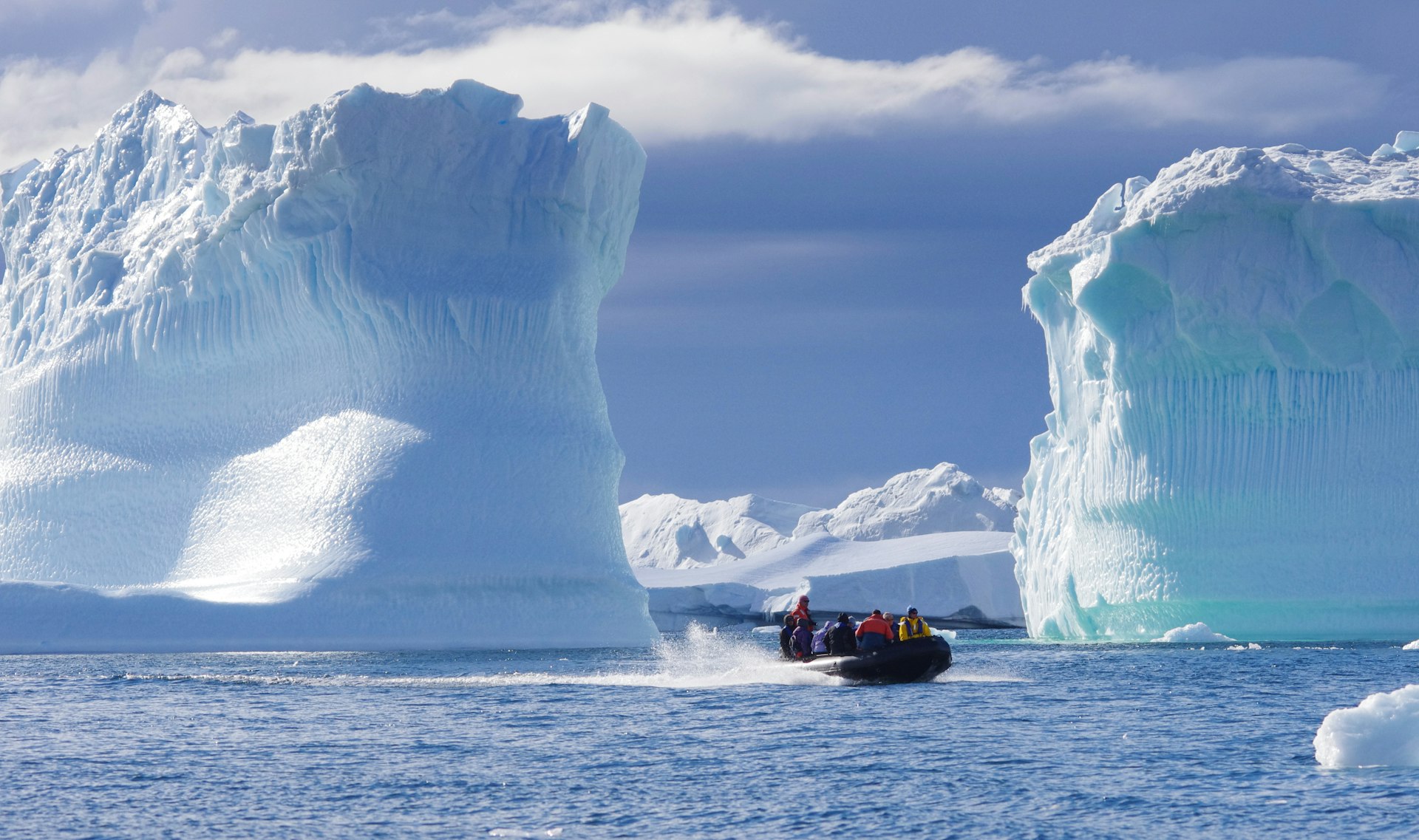
Ocean cruises access coastlines and islands: the Caribbean, the Mediterranean, Alaska’s Inside Passage, Antarctica, the Norwegian fjords, the South Pacific. If your dream destination is surrounded by open water, an ocean cruise is your path.
River cruises unlock the interiors of continents. The Danube takes you from Budapest through the Wachau Valley to Vienna. The Rhine winds past medieval castles and vineyard-draped hillsides. The Mekong brings you from Saigon to Siem Reap through floating markets and ancient temples. The Nile connects Luxor to Aswan through 4,000 years of history.
The geography is the deciding factor for many people. If you want to see the heart of Europe, Southeast Asia, or Egypt, a river cruise is the most elegant solution.
The Daily Rhythm
An ocean cruise day might look like this: wake up, breakfast in the buffet or main dining room, dock at a port around 8 AM, take a shore excursion or explore independently, return to the ship by 4 PM, swim, dress for dinner, see a show, have a drink, sleep.
A river cruise day is more intimate: wake up to a new view outside your window, breakfast while the ship docks (or is already docked), walk directly into town for a guided excursion, return for lunch as the ship cruises to the next stop, an afternoon cultural visit, dinner onboard with wine pairings included, a local musician plays in the lounge, bed.
The river cruise rhythm is slower and more immersive. You’re never more than a few steps from shore. There are no sea days — every day brings a new town or city. The pace suits people who want to see things, not people who want to escape things.
What Is Included
This is where river cruises quietly dominate on value.
Most ocean cruise fares cover your cabin, main dining room meals, and basic entertainment. Everything else — specialty restaurants, shore excursions, drinks, Wi-Fi, gratuities — is extra. A $2,000 ocean cruise fare often becomes $3,500 by the time you disembark.
Most premium river cruises include nearly everything: all meals (often with wine at lunch and dinner), guided excursions in every port, Wi-Fi, bicycles for independent exploration, and sometimes gratuities. When AmaWaterways quotes you $3,500 per person for a Danube cruise, that’s genuinely close to what you’ll pay.
The luxury ocean lines — Regent Seven Seas, Silversea, Seabourn — match this all-inclusive model, but at a higher price point. Regent’s fares include business-class airfare, all excursions, all beverages, all gratuities, and Wi-Fi. You pay once and never open your wallet again. It’s the purest form of all-inclusive travel on water.
Motion and Comfort
If seasickness concerns you, river cruises eliminate the issue entirely. Rivers don’t have waves. The most dramatic motion you’ll experience is a gentle current-driven drift. People who can’t tolerate open water do beautifully on rivers.
Ocean cruises on modern ships have stabilizers that dramatically reduce motion, but the Drake Passage to Antarctica, the Bay of Biscay, and winter North Atlantic crossings will test anyone’s sea legs. Premium cabins with balconies in the midship section offer the most stability.
For Groups and Teams
Both formats work for group travel, but they serve different purposes.
Ocean cruises for groups work when you want a mix of togetherness and independence. Your team can scatter across a massive ship during the day — some at the pool, some in the spa, some on a shore excursion — and reconvene for a private dinner. The variety of onboard activities means everyone finds something they enjoy.
River cruises for groups create deeper bonding. When 20 of your colleagues are on a ship with 130 other passengers, you’re a significant presence. Shared excursions, communal meals, and the intimacy of the ship create the kind of connections that team-building consultants charge a fortune to manufacture.
For company offsites, we often recommend river cruises because the shared-experience density is so high. Every meal is together. Every port is explored together. By day three, your team has inside jokes that will last for years.
Price Ranges
Ocean cruises span the widest range in travel. You can sail the Caribbean for $600 per person on a mainstream line or spend $45,000 per person on a Regent Seven Seas world cruise. The sweet spot for premium ocean cruises — Celebrity, Holland America, or Viking Ocean — sits around $2,000 to $5,000 per person for a seven to ten night itinerary.
River cruises occupy a narrower, higher band. Expect $2,500 to $5,500 per person for a seven-night European sailing on a premium line. The best cabins on the best ships during peak season can push $7,000 or higher. But remember: most of that is truly all-inclusive.
Key Takeaways
- Ocean cruises are floating resorts focused on onboard variety; river cruises are floating boutique hotels focused on destination immersion.
- River cruises include nearly everything in the fare (meals, excursions, wine, Wi-Fi), while ocean cruise fares often grow 50-75% with add-ons.
- If seasickness is a concern, river cruises eliminate it entirely — no waves, no swells, no Drake Passage.
- For group bonding, river cruises create deeper connections because of the intimate ship size and shared excursion structure.
- Geography decides for many people: coastlines and islands mean ocean, continental interiors mean river.
The Bottom Line
Choose an ocean cruise if you want variety onboard, coastal destinations, the option for sea days, and the ability to customize your level of social engagement. Choose it for Caribbean warmth, Alaskan glaciers, Mediterranean ports, or Antarctic expeditions.
Choose a river cruise if you want intimate travel, interior destinations, included excursions, and a pace that prioritizes depth over breadth. Choose it for European capitals, Southeast Asian temples, Egyptian antiquities, or any journey where the landscape between stops is as compelling as the stops themselves.
If you genuinely can’t decide, we can help. Open a Slack channel with our team — it takes five minutes, costs nothing, and the channel stays open as long as you want it. We’ll ask you five questions and have a recommendation within the hour. That’s what a travel concierge in your Slack channel is for — eliminating exactly this kind of decision fatigue so you can focus on being excited about the trip.